Balto — a 2015 Leopard 44
Balto is a 2015 Leopard 44 — a Robertson & Caine catamaran built in Cape Town. We took handover of her in Nouméa in October 2025, sailed her around New Caledonia for a fortnight to find out what we'd bought, and then brought her home to Australia. She has since done the Clarence and the Keppels, and has logged a bit over 1,200 nautical miles under us.
Like any boat, she has been a list of jobs. Some of that list is below too.
You can click any image to open the gallery and step through the captions.
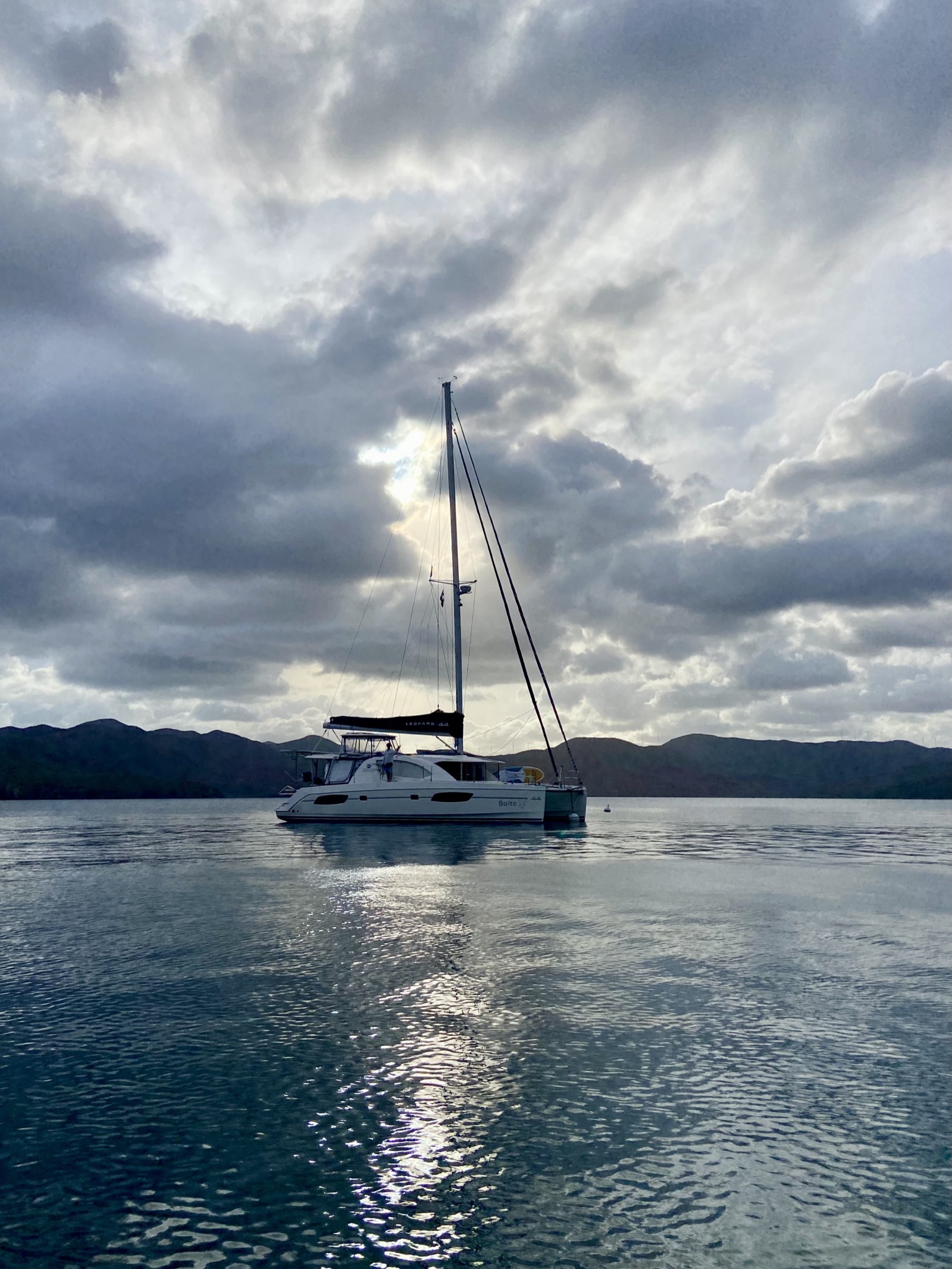
At anchor in Baie de Prony, New Caledonia, days after we took her over.
Click for the full frame.
The boat
The Leopard 44 is a little unusual among production catamarans in having a forward cockpit as well as an aft one, reached through a door in the front of the saloon. It sounds like a gimmick and isn't — at anchor it's the best seat on the boat, and on passage it's somewhere to sit that isn't behind the helm.
New Caledonia, October 2025
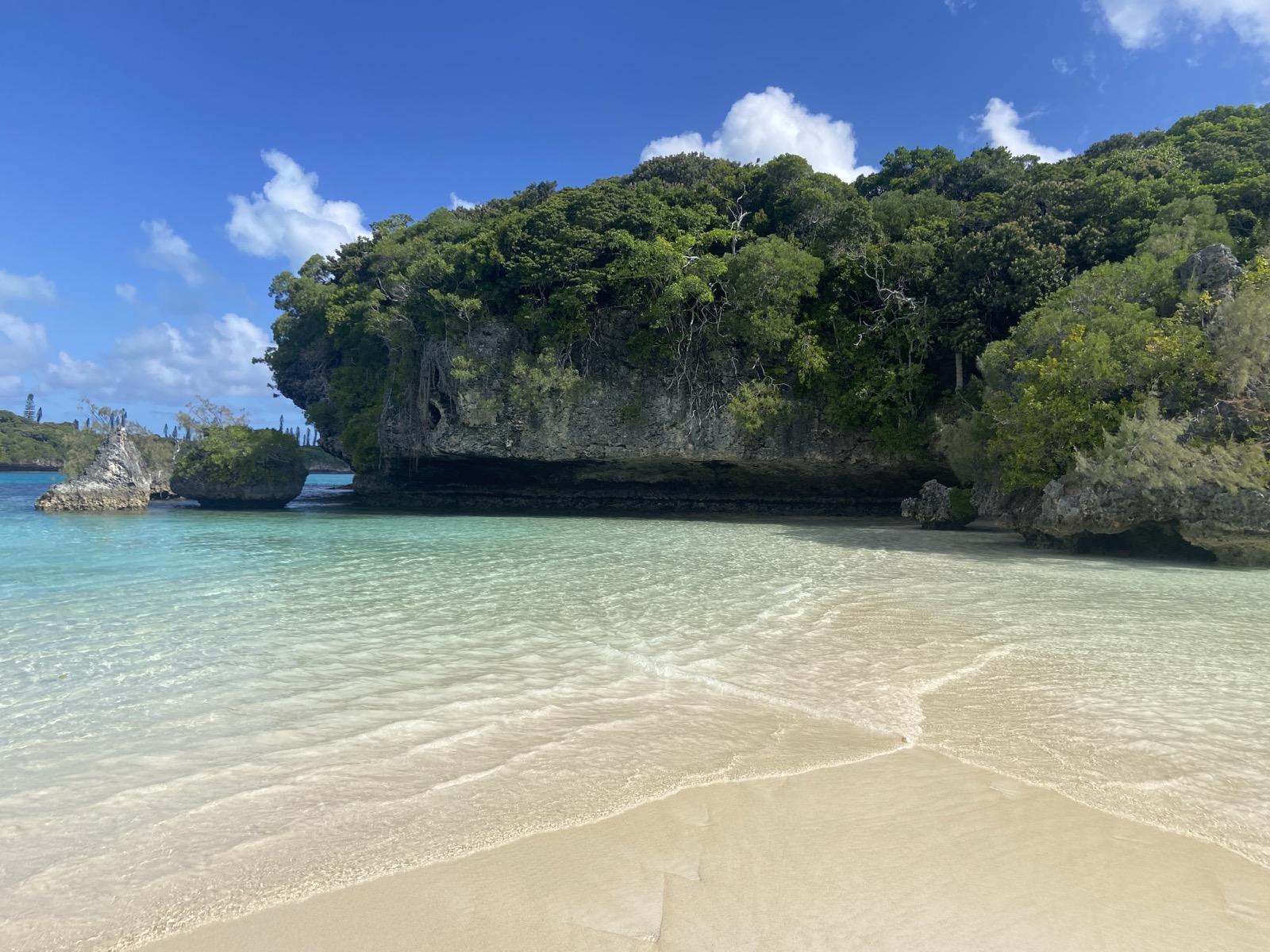
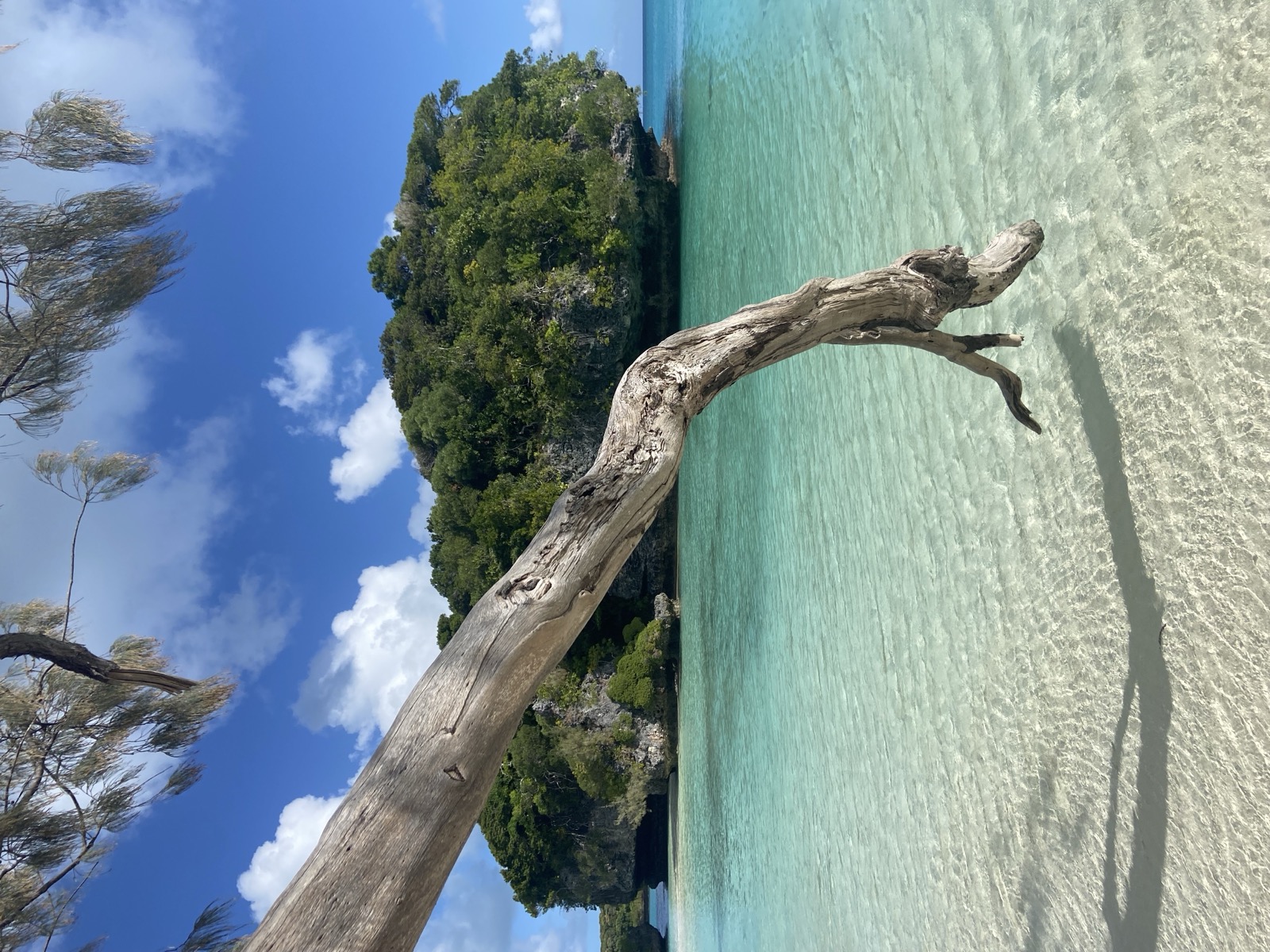
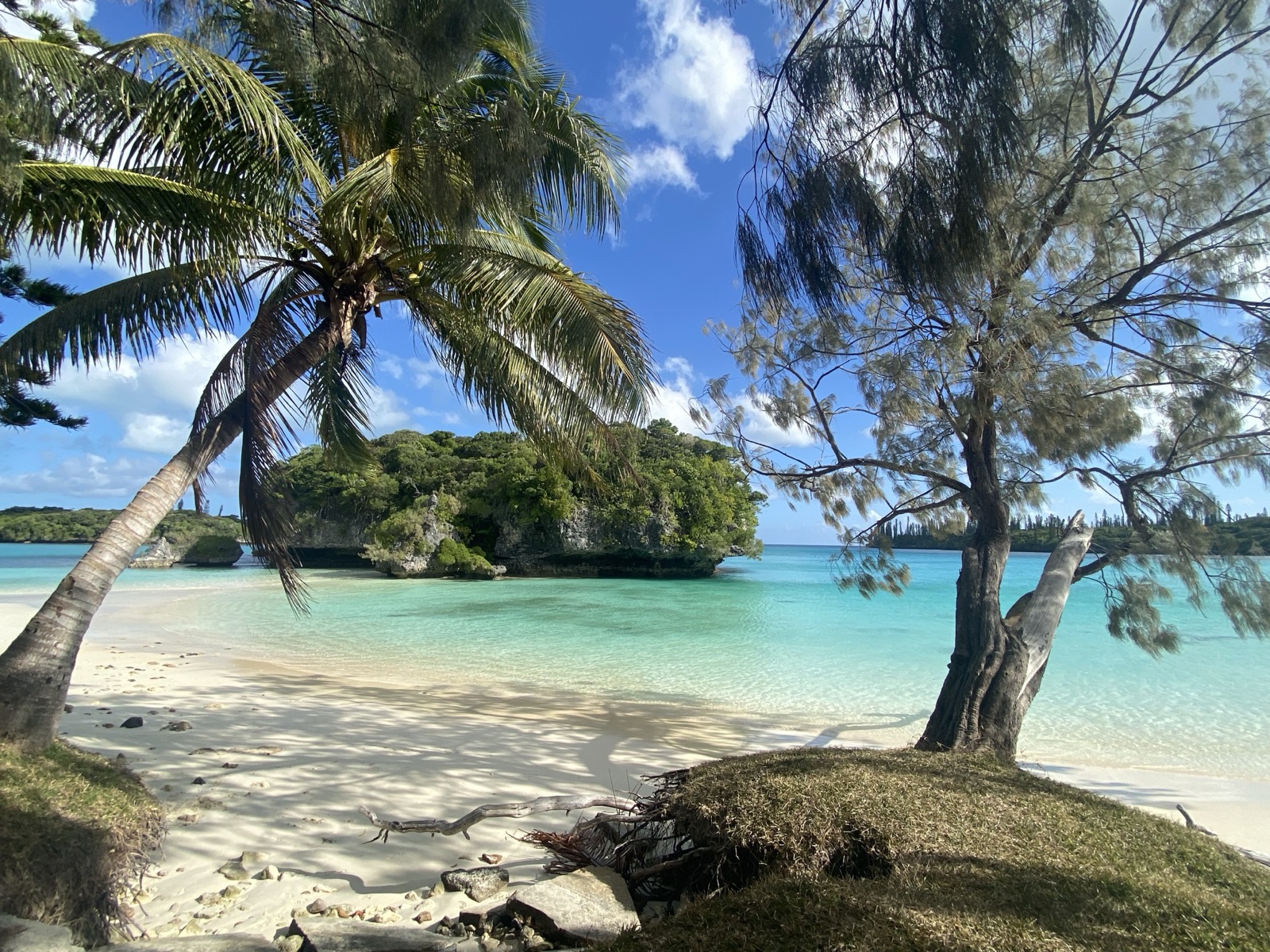
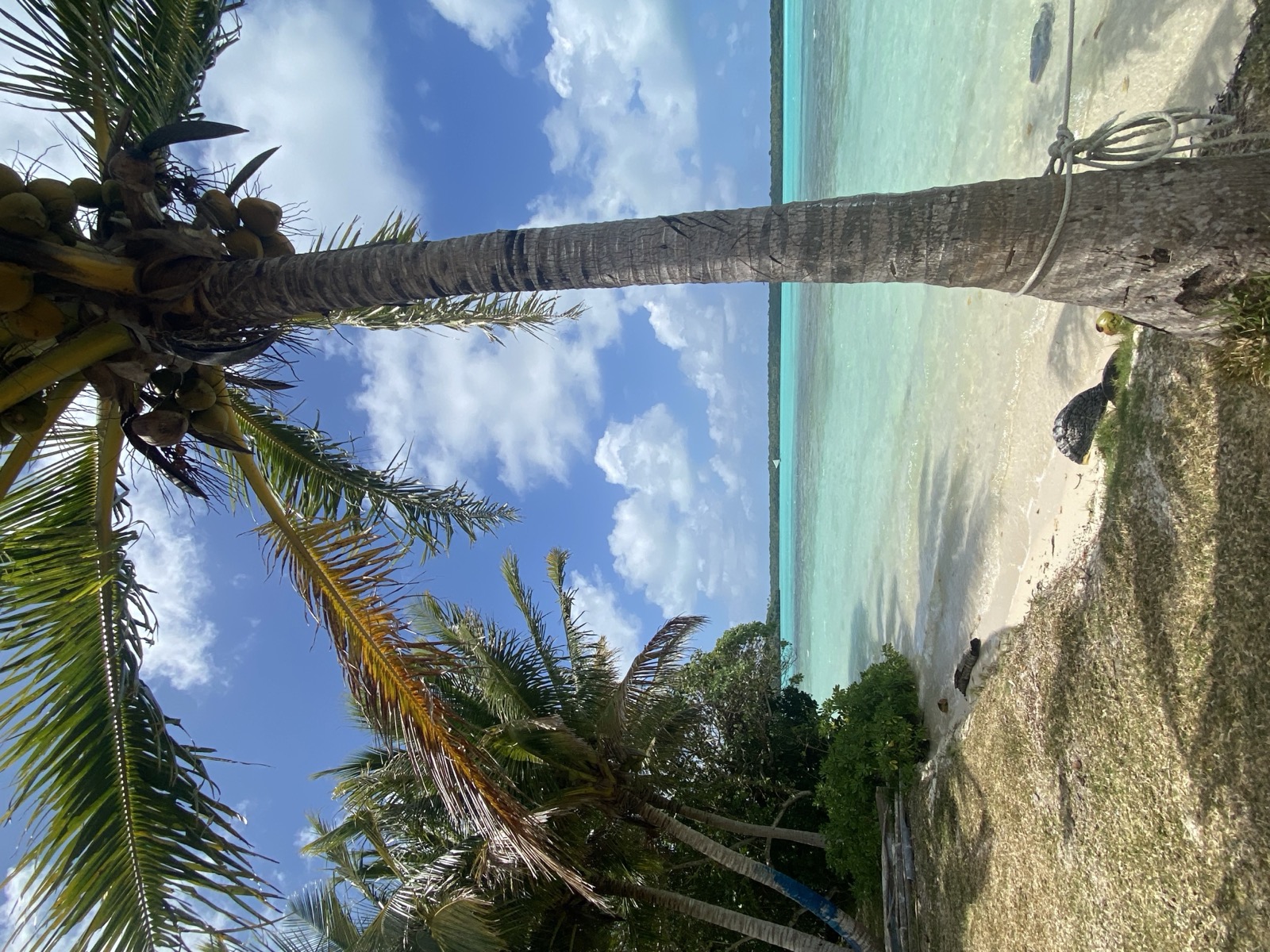
We took her over in Nouméa and spent the first couple of days on a shakedown with the kids aboard, which is the polite term for finding out which things don't work. From there we pushed south-east to the Île des Pins — an unglamorous slog, motoring upwind into short, steep seas for seven hours. Ian was seasick for most of the way. He still says it was worth it: the Île des Pins is one of the most beautiful places we've sailed.
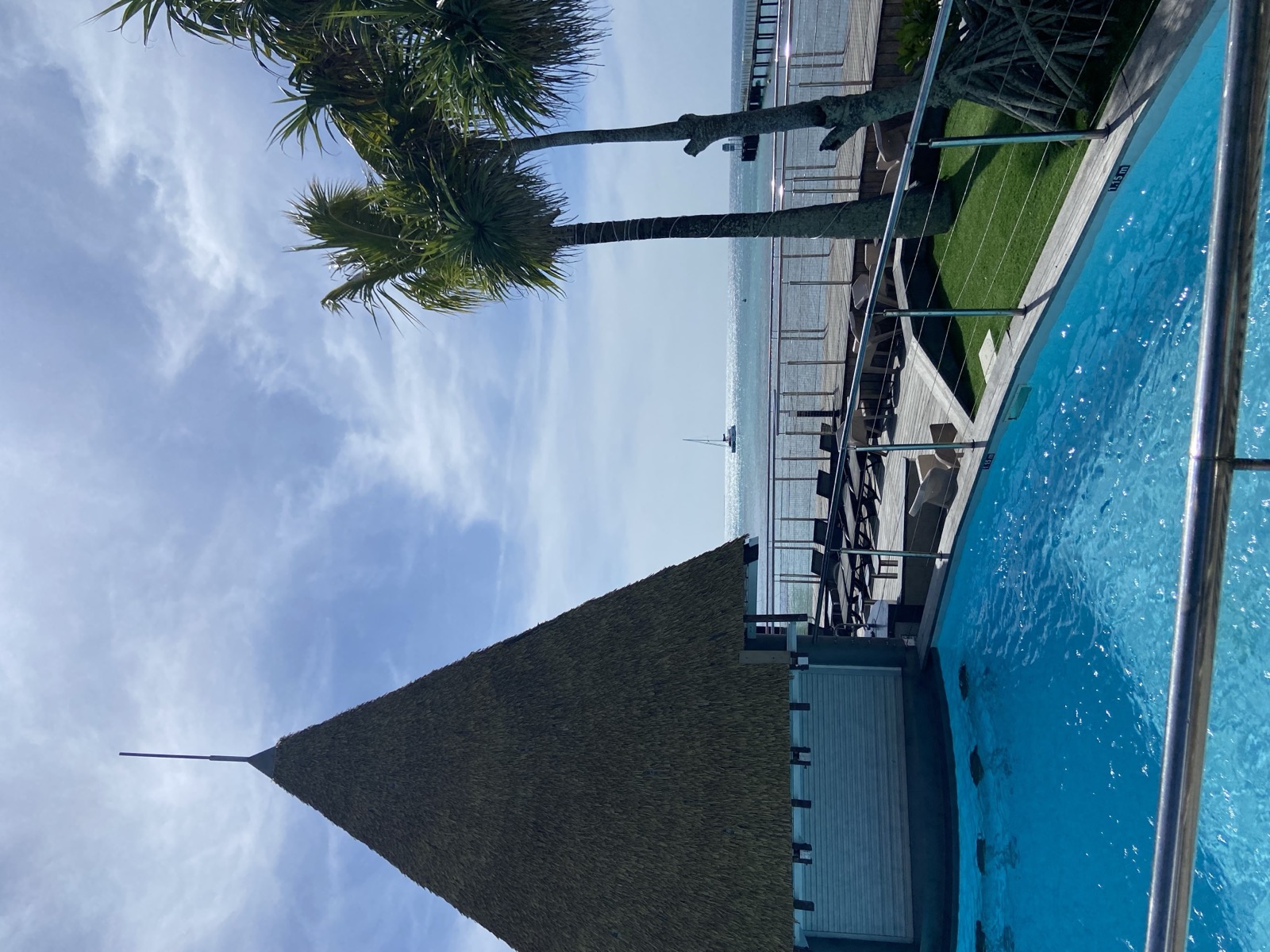
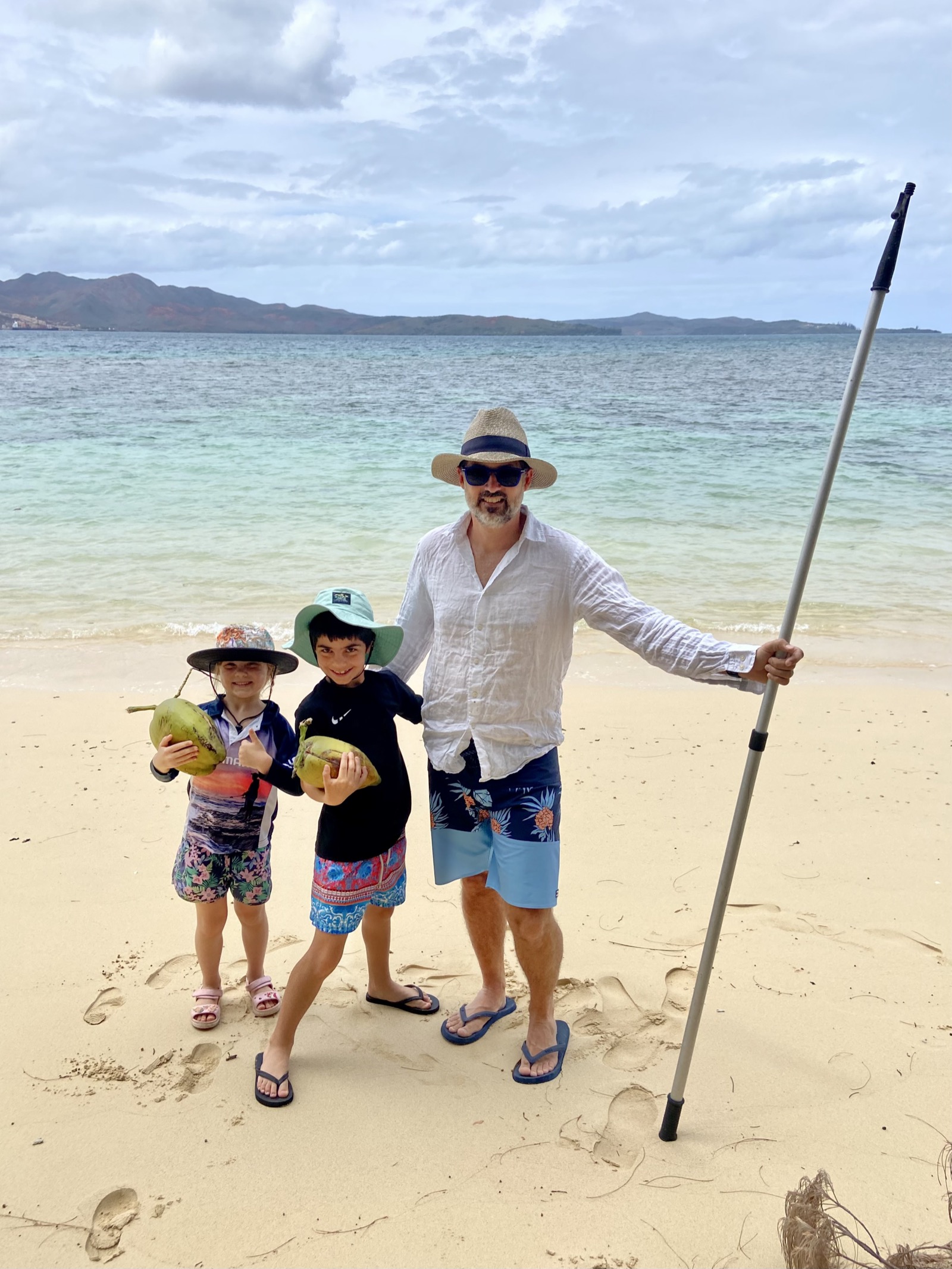
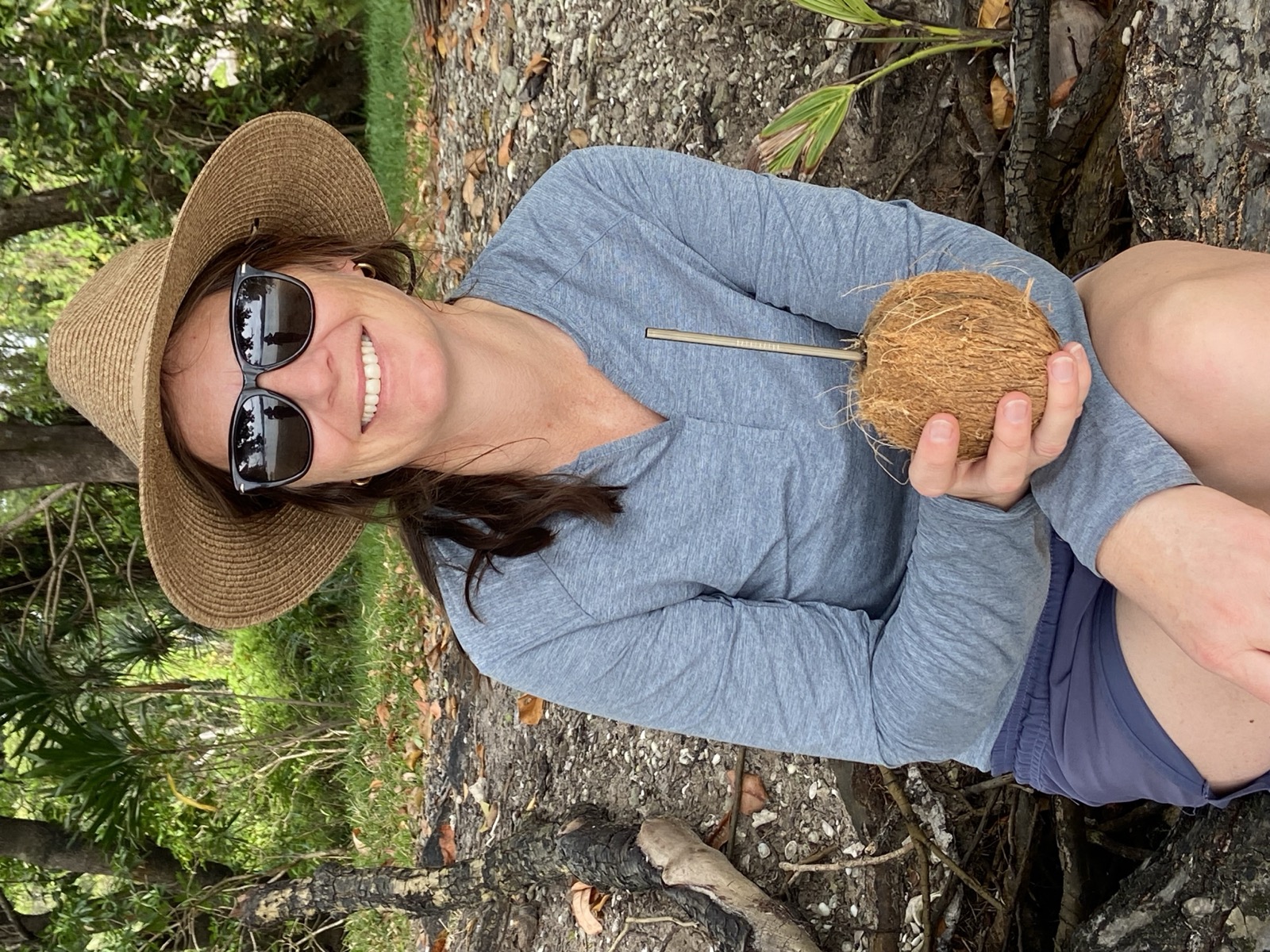
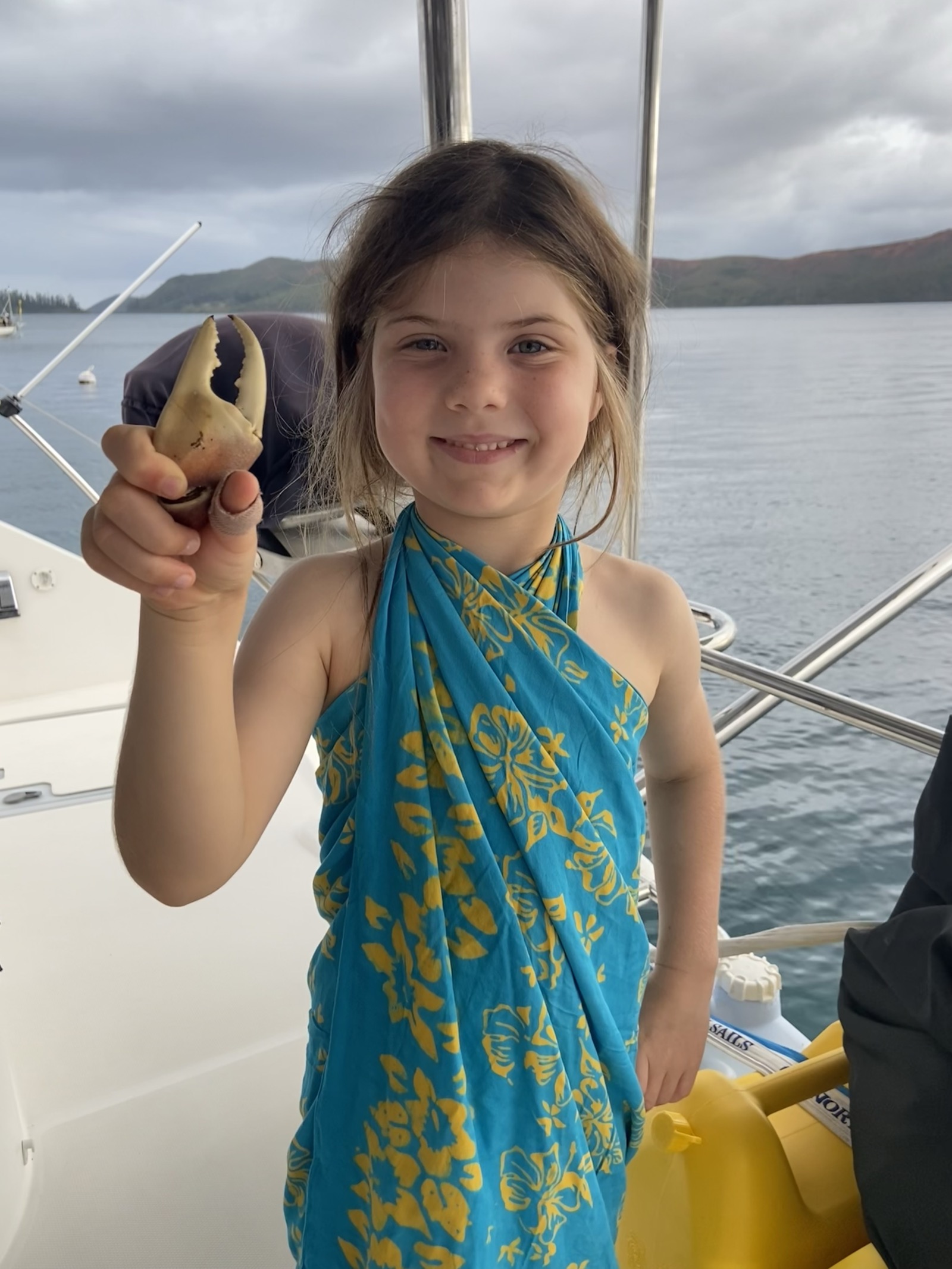
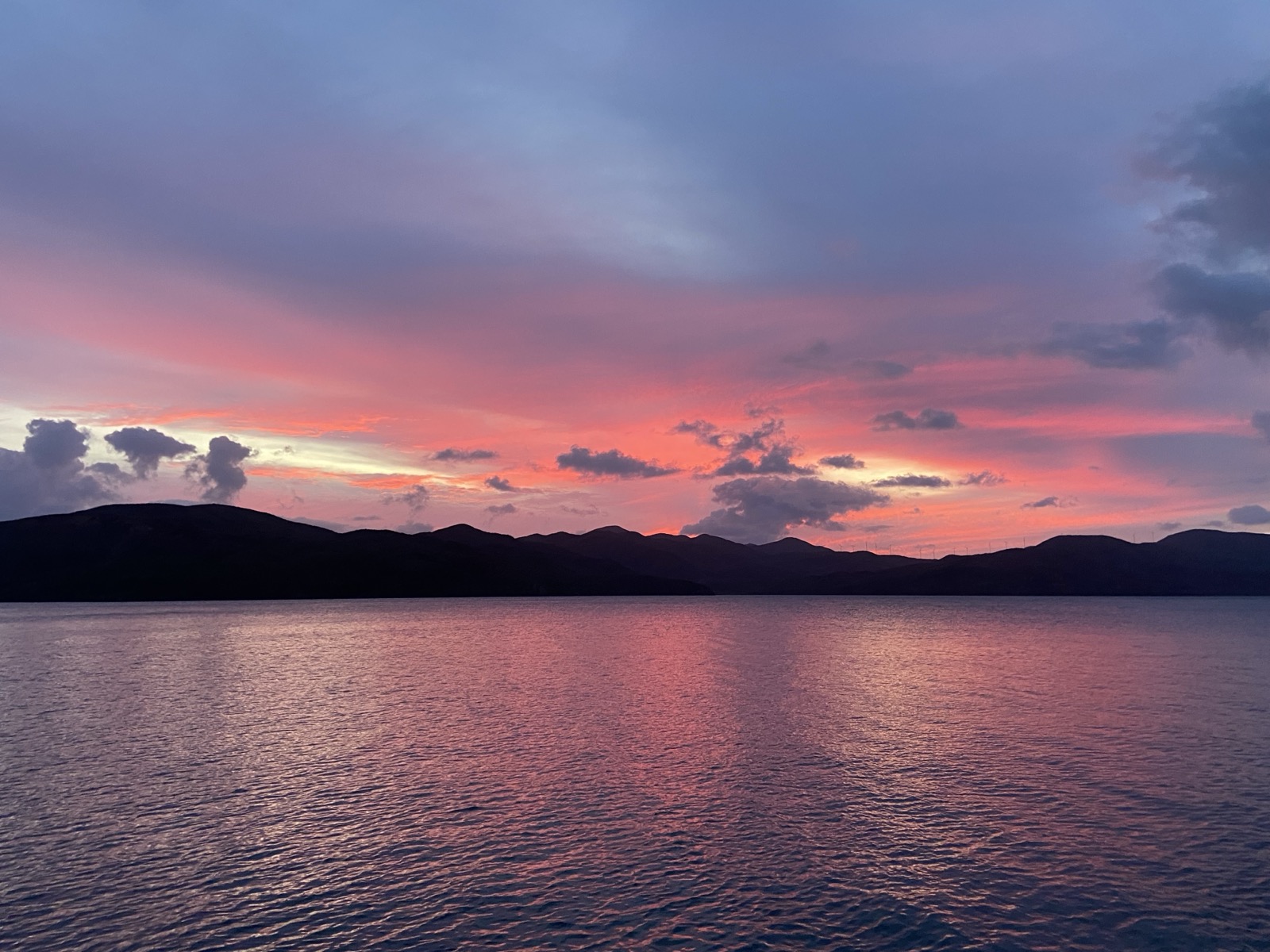
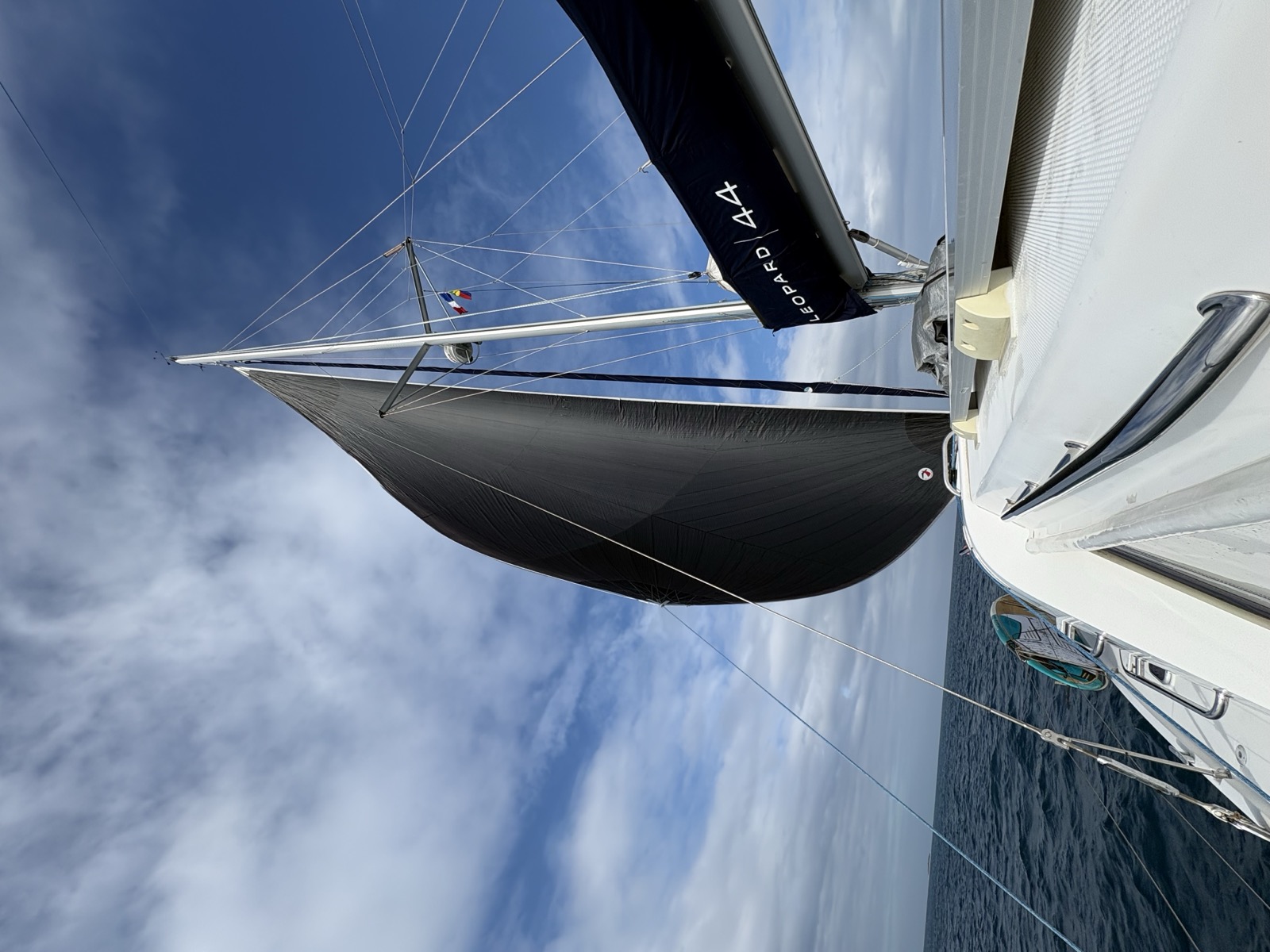
The trip back to Nouméa was the opposite in every way. We came up from Kuto under a code 0 for most of the way, stopped at Baie de Prony and Île Casy, and worked our way out to the islets off Nouméa. Îlot Maître is a resort island and not my thing, but the snorkelling was excellent and beer on tap didn't hurt. At Îlot Larégnère the kids snorkelled with reef sharks and the place was covered in coral and thick with turtles.
Nouméa to Australia — 793 nm
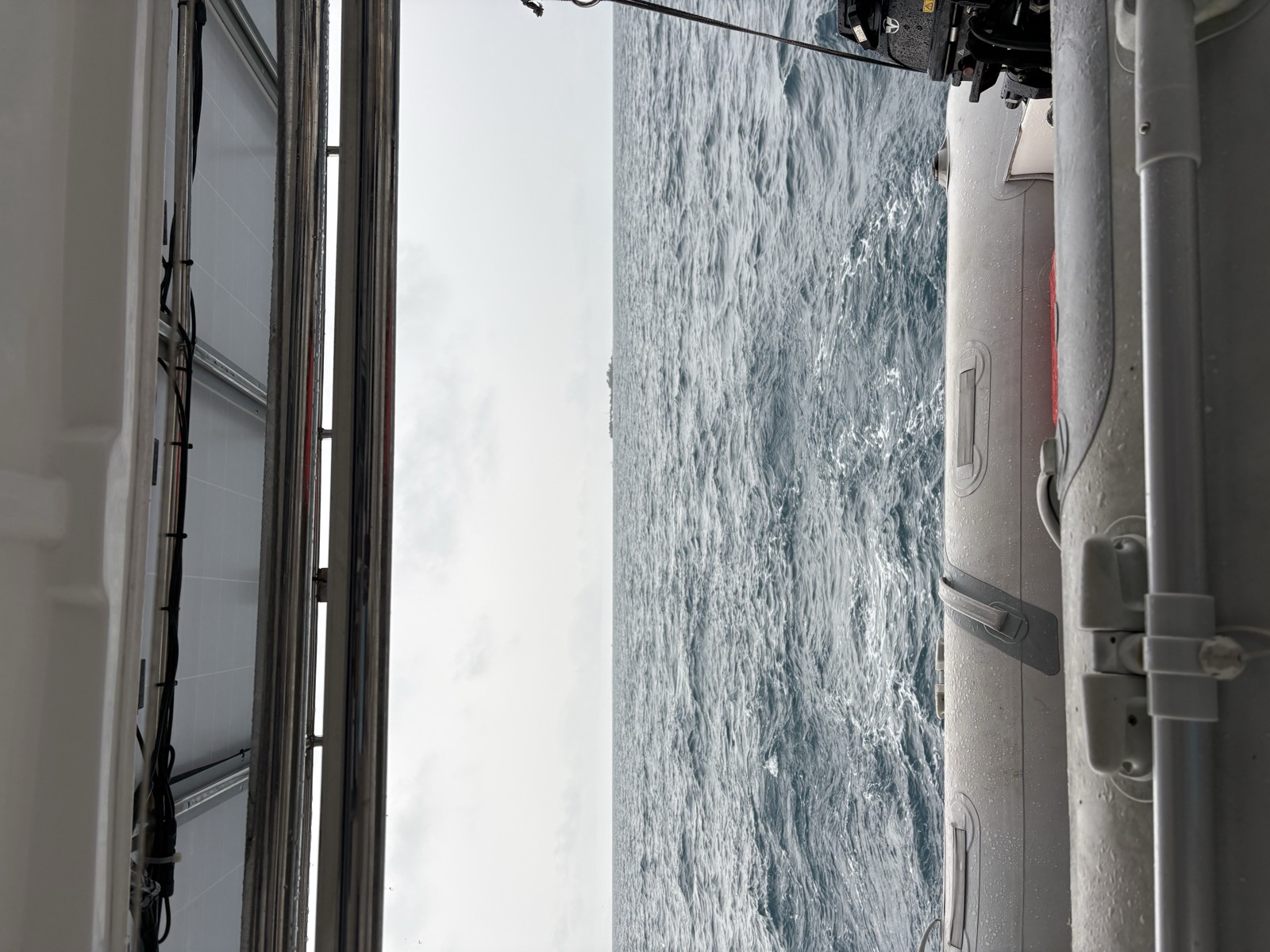
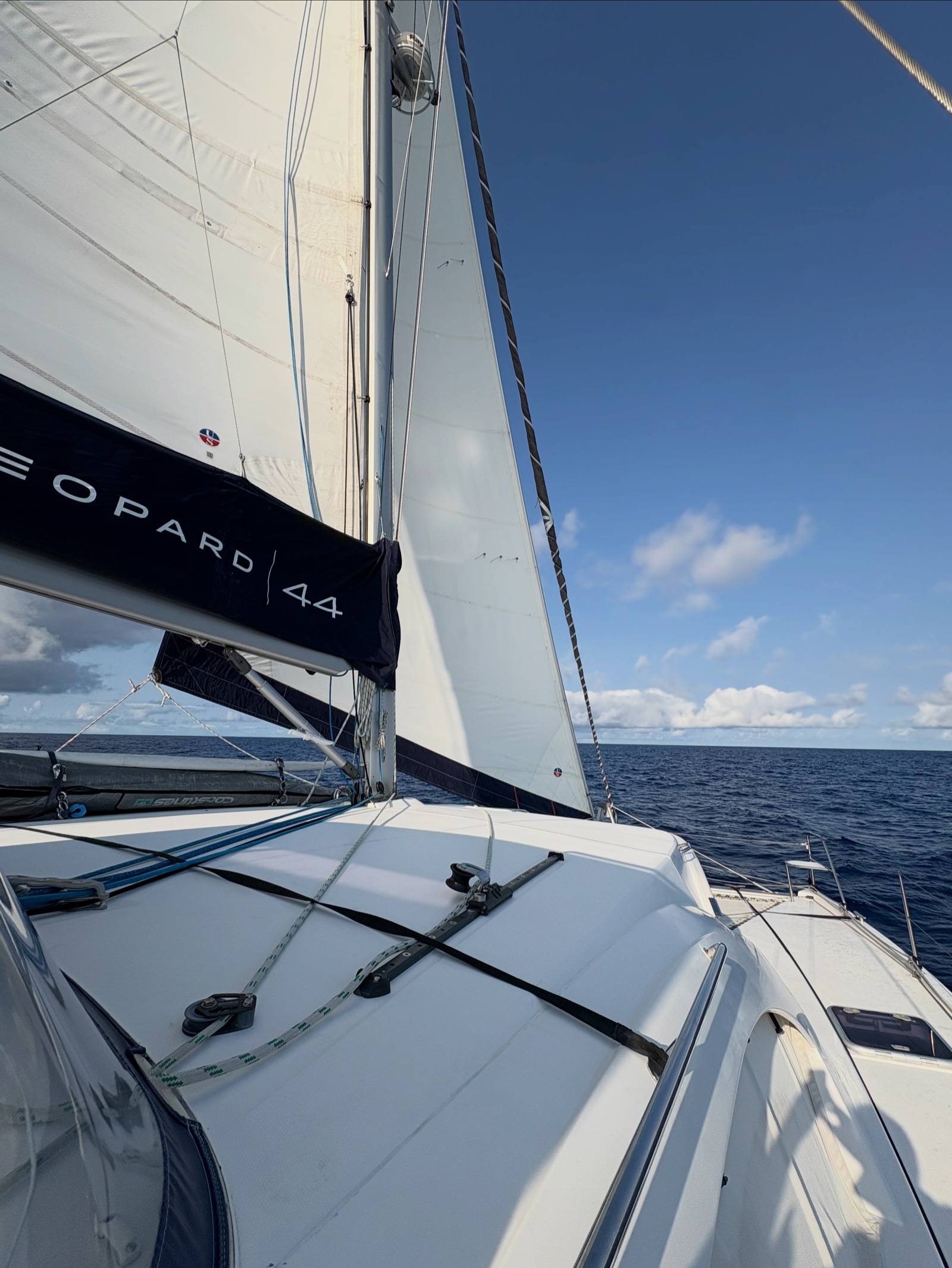
We left Nouméa on 21 October 2025 and made landfall five days and fifteen hours later, averaging six knots over 793 nautical miles. In my log at the time I described it as a debacle, although it was still fun!
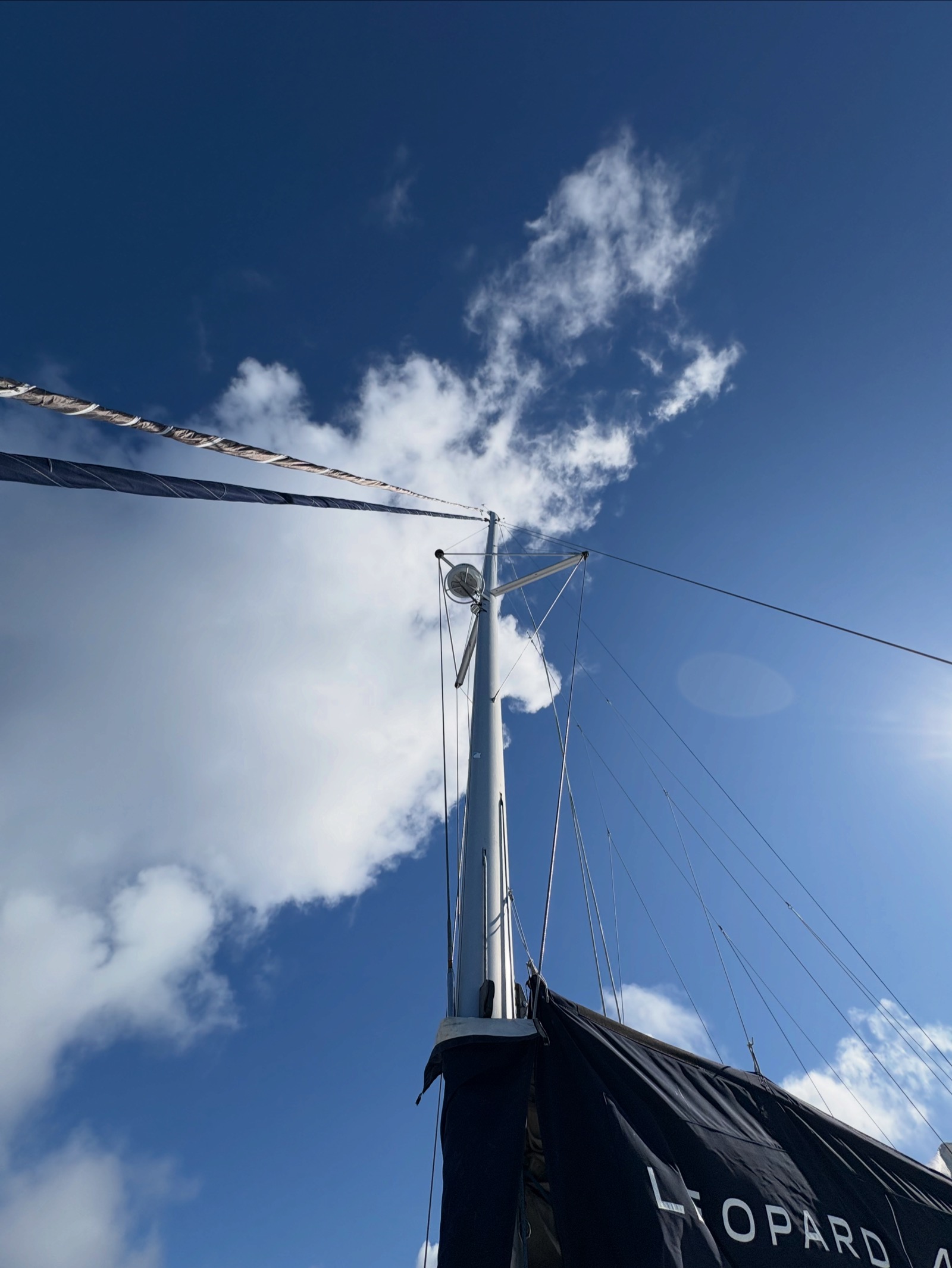
The bowsprit broke (popped up and needed relashing down). The mainsail then refused to come down, which bought me several trips up the mast while at sea, and once we did get it down the head patch tore off, which put the main out of action entirely. The starboard engine kept conking out — for a very simple reason, see below. By the time we reached the coast we couldn't make the nominated customs clear-in point — storms came up, and we were in a >4m following sea. Together with a shortage of reliable propulsion of either the sail or the iron-sail variety we ended up with a police escort to a safe anchorage to wait for it to blow over and postpone clearing into Australia.
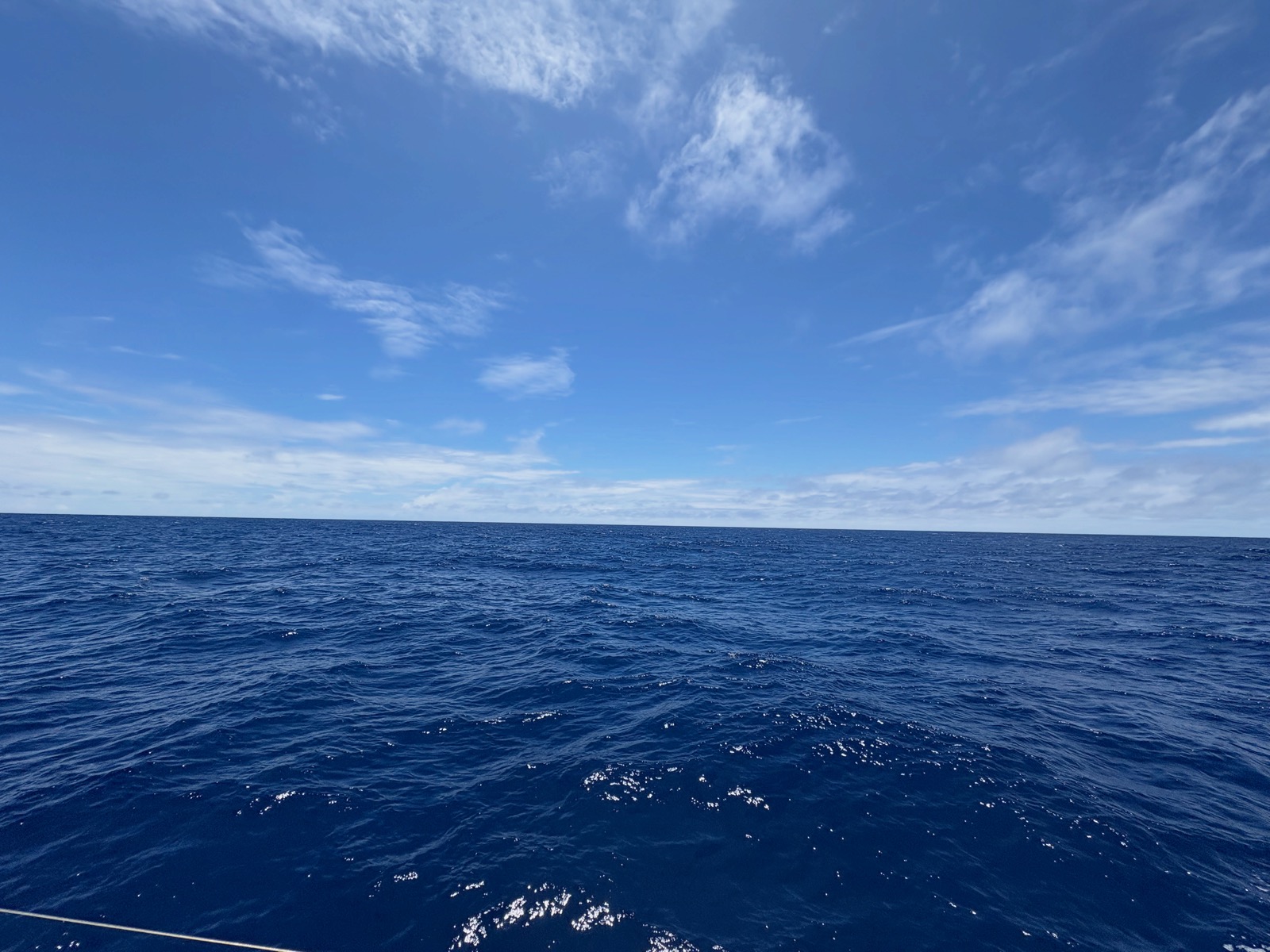
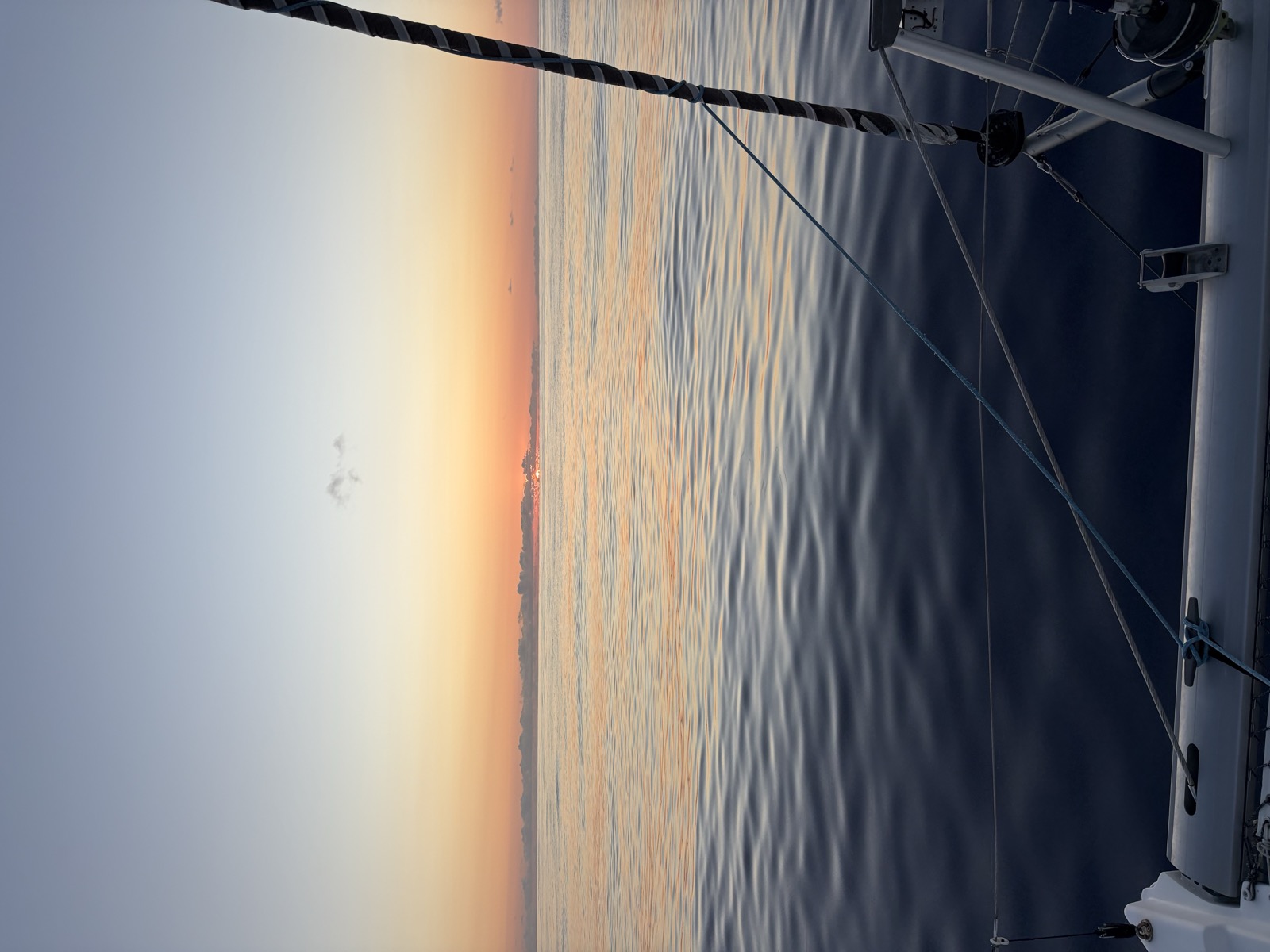
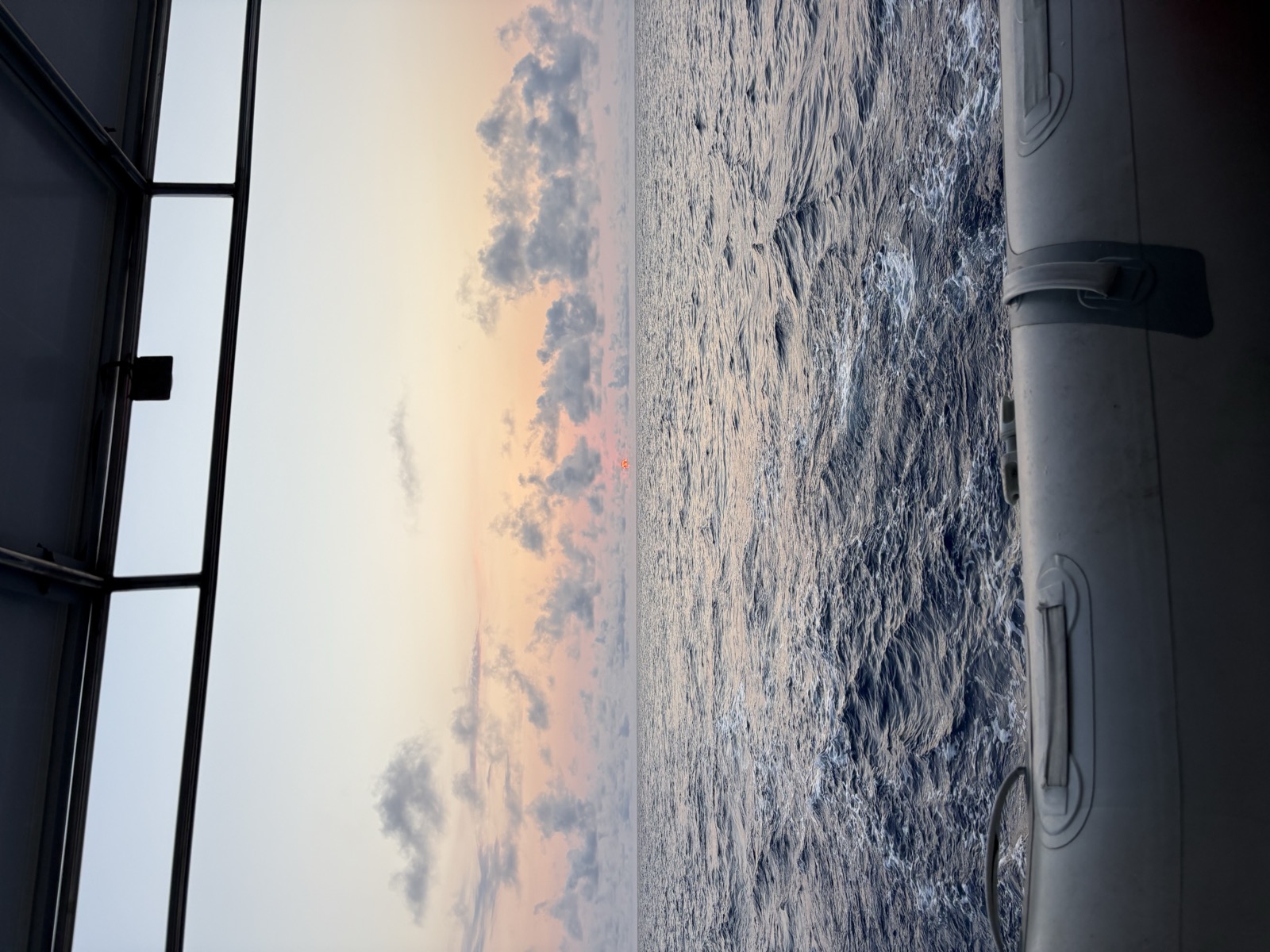
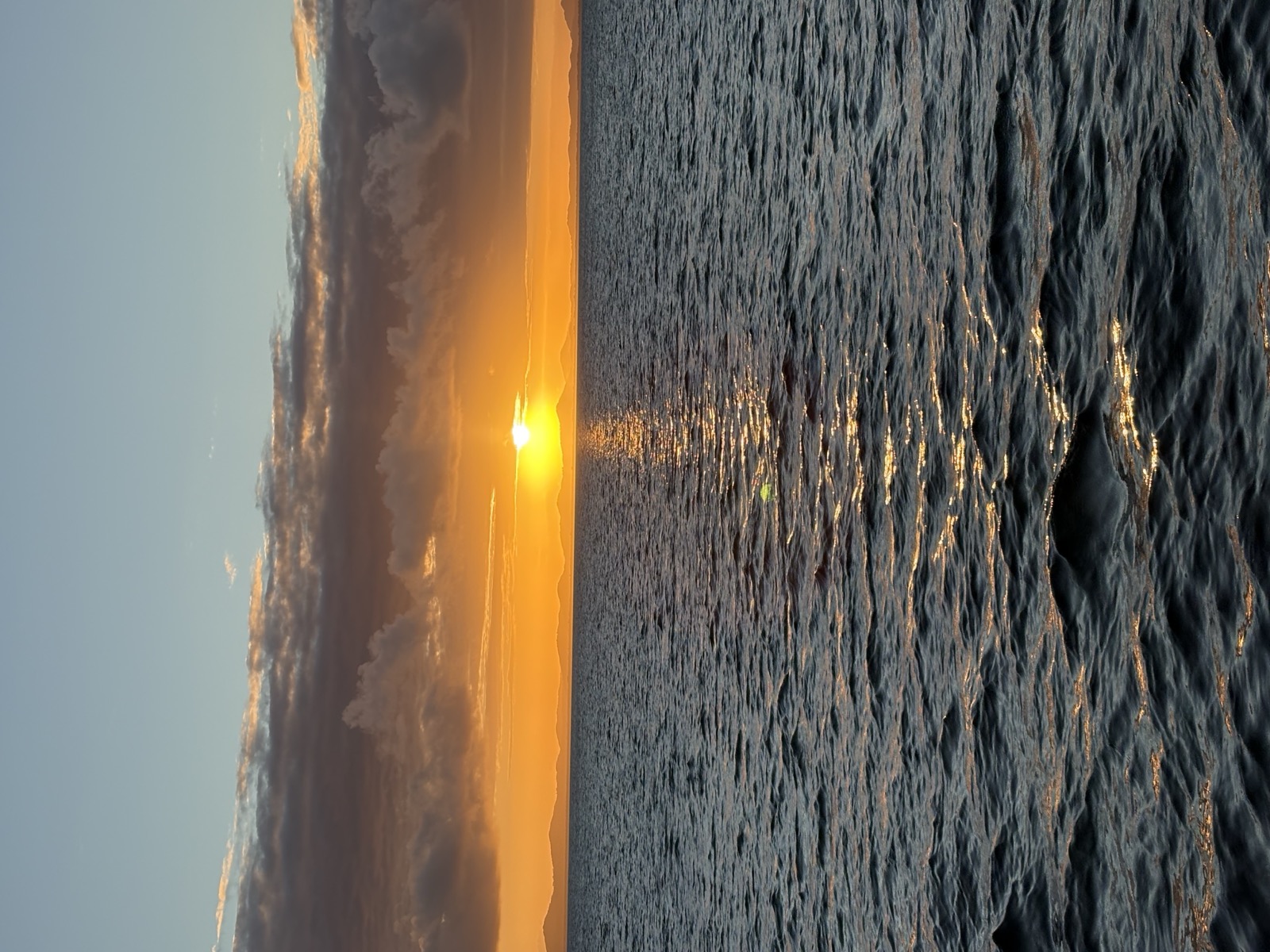
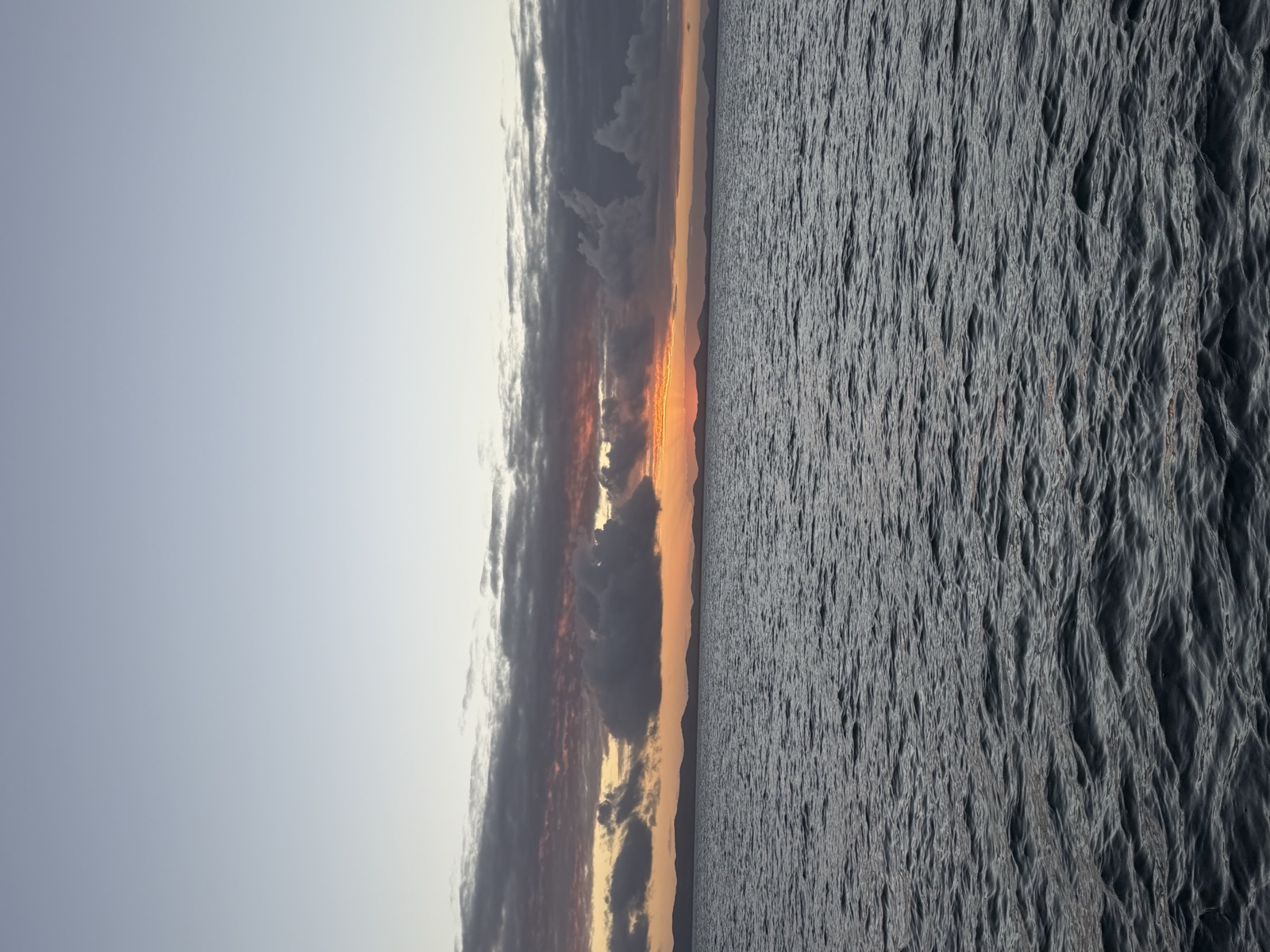
For all that, it was still blue-water sailing: dolphins for company, several game fish that got away, and that particular blue you only get a long way offshore.
We crossed to Bundaberg on 27 October to clear in properly, where Border Force then didn't show up. We initially thought it was just Australian public service at its finest, but it turned out that they'd been 200km away, clearing in a badly damaged boat that was caught in the same storm.
A pub crawl up the Clarence, December 2025
The Clarence is an underrated cruising river, and a catamaran's draft opens up a lot of it that a keelboat would have to think twice about. Better still, there are pubs up and down the river with free public docks — several with power and water thrown in.
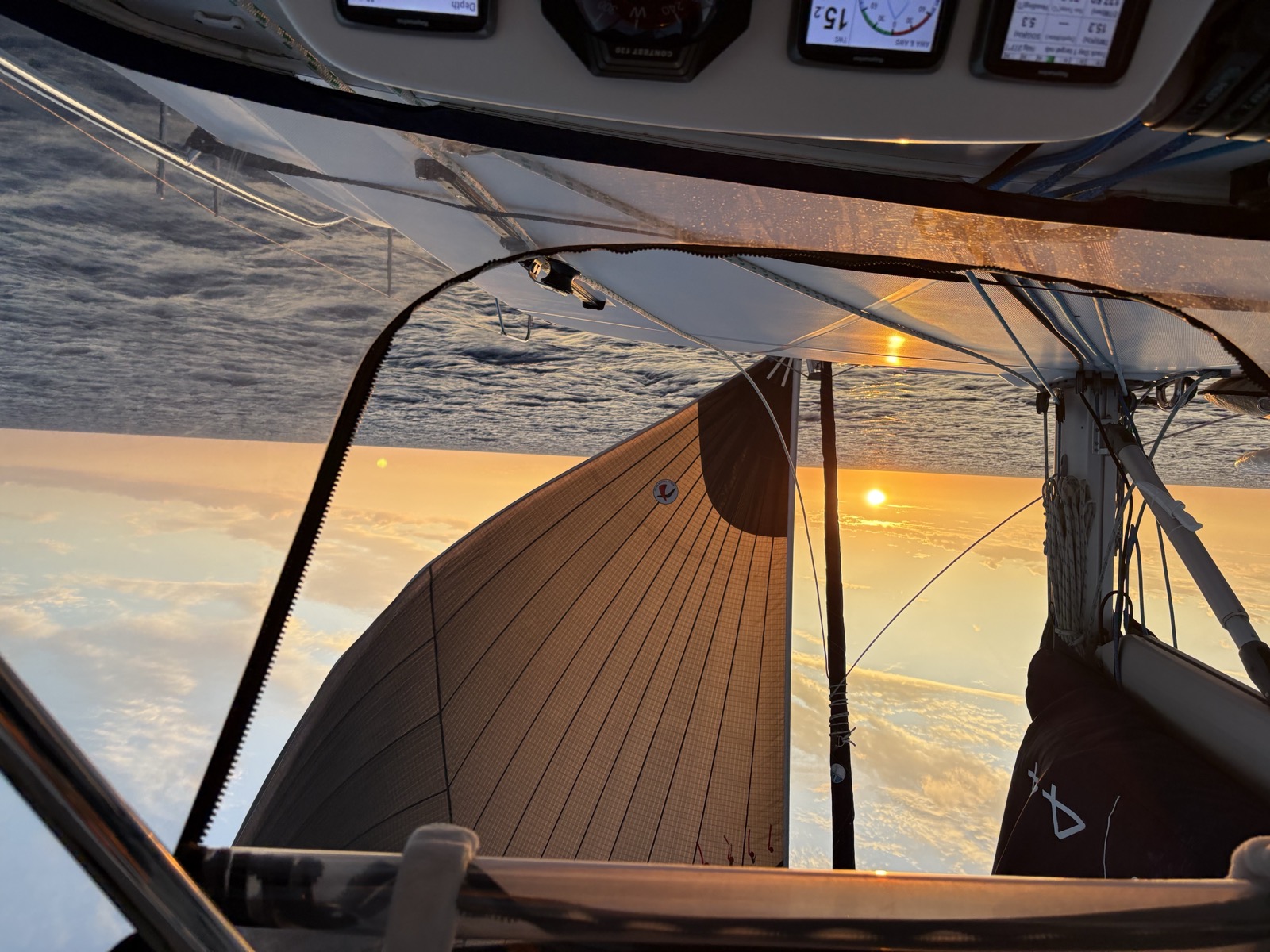
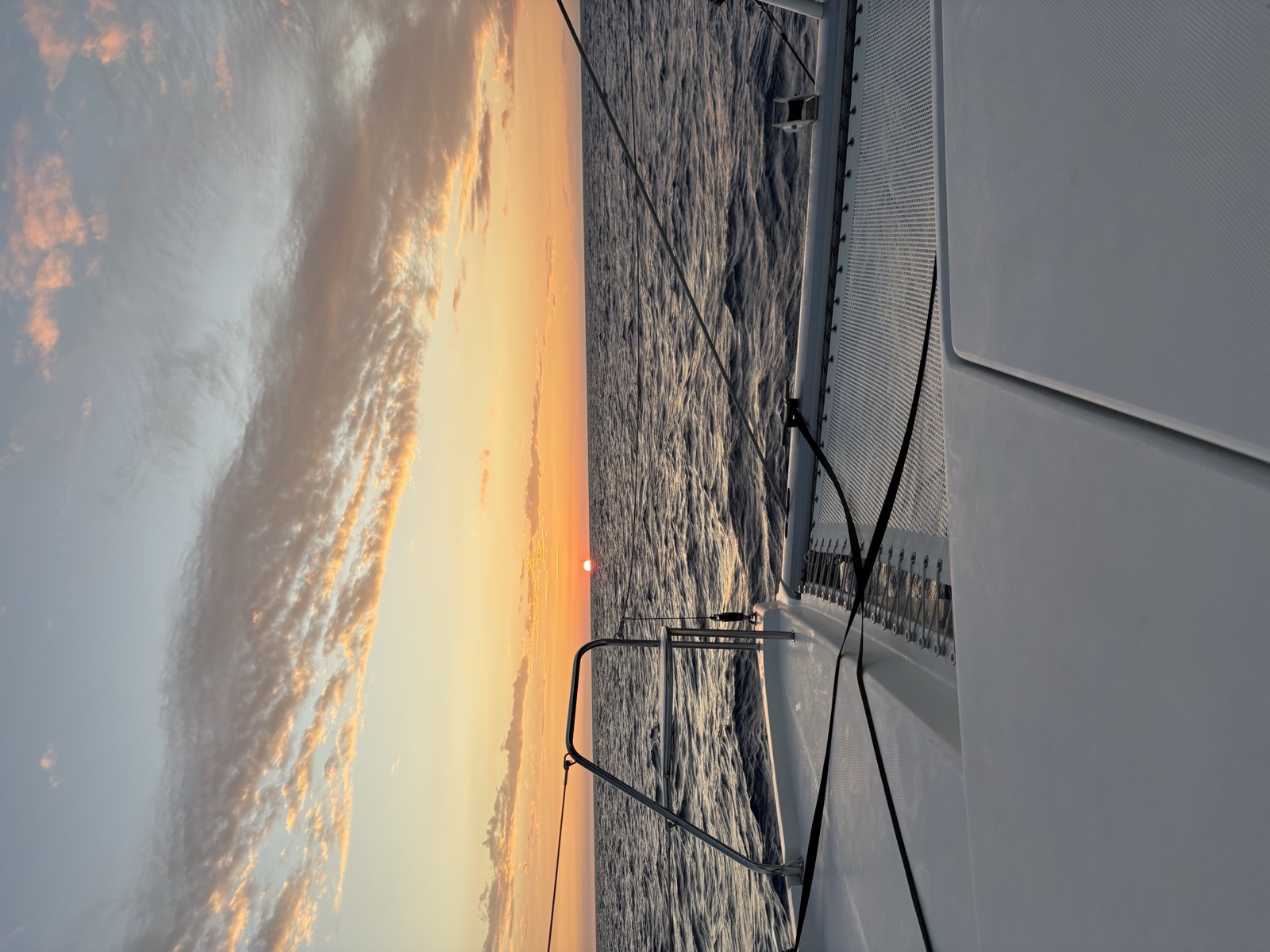
We sailed Coffs to Yamba on 17 December, picking a day with at least some sailing potential rather than beating into the north-easters, then spent three days working our way up the river and back. We took the kids, saw dolphins, went through an opening bridge, and caught up with family at one of the pubs for dinner. Then a wonderful sail back under the spinnaker.
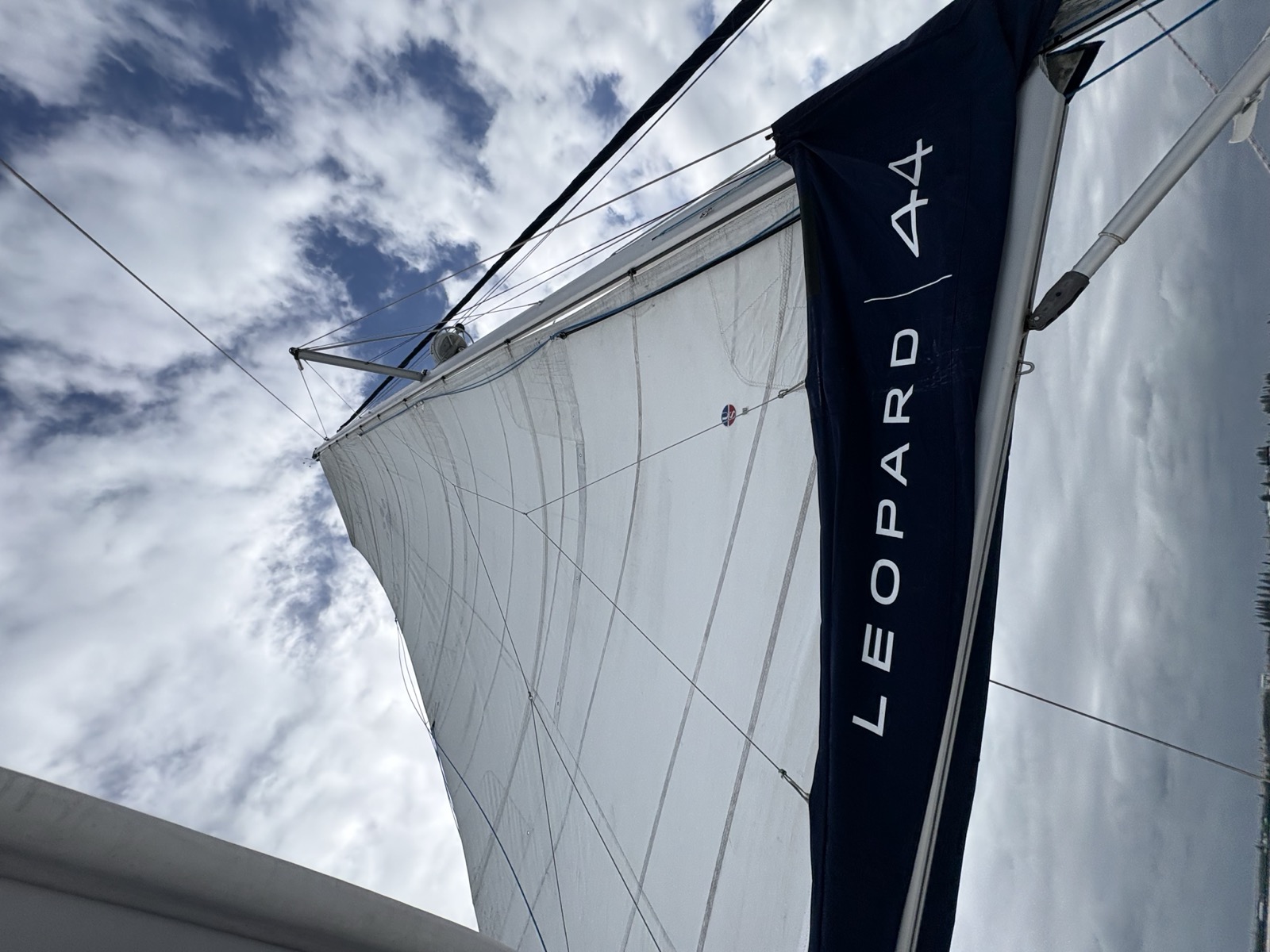
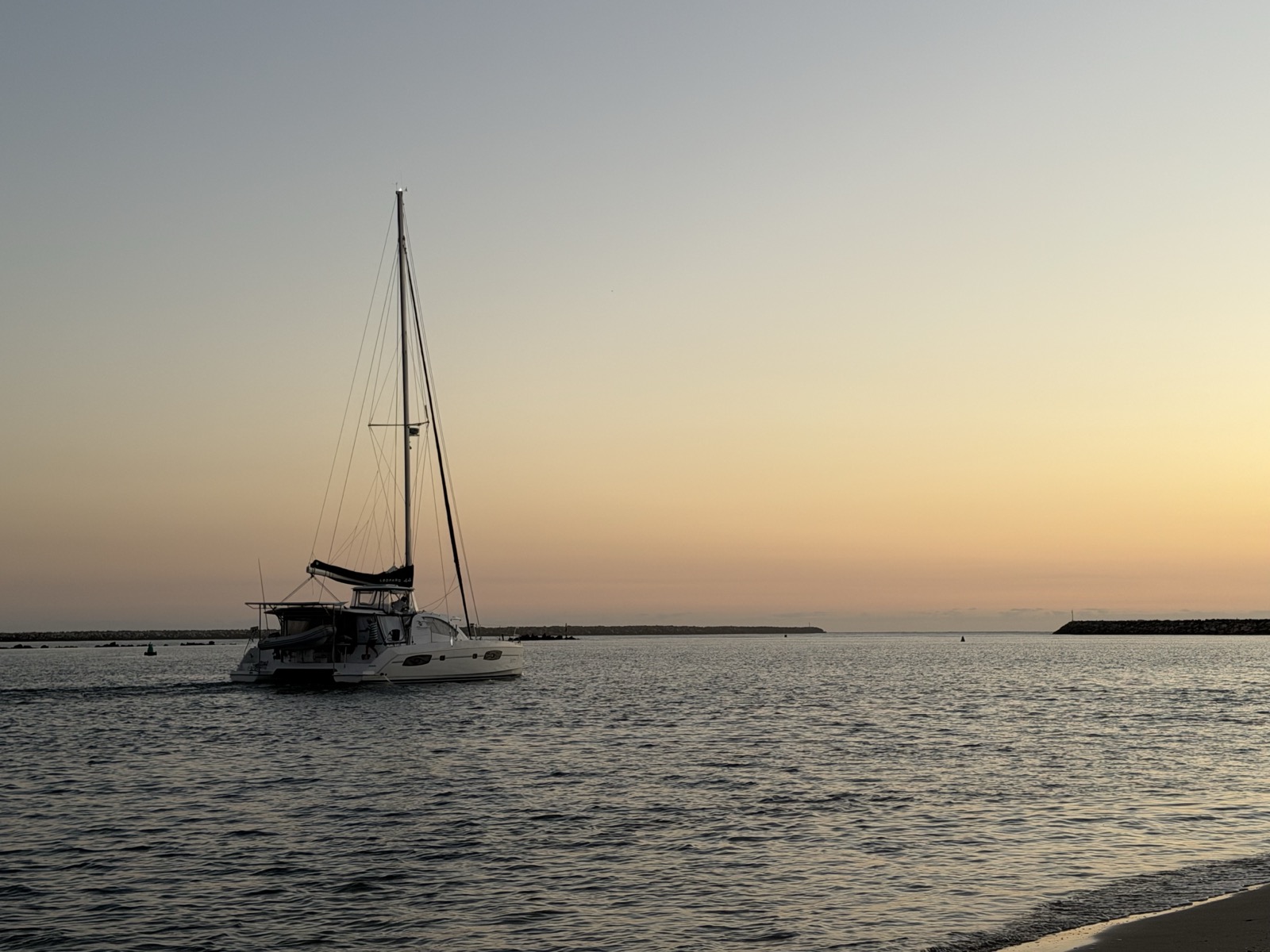
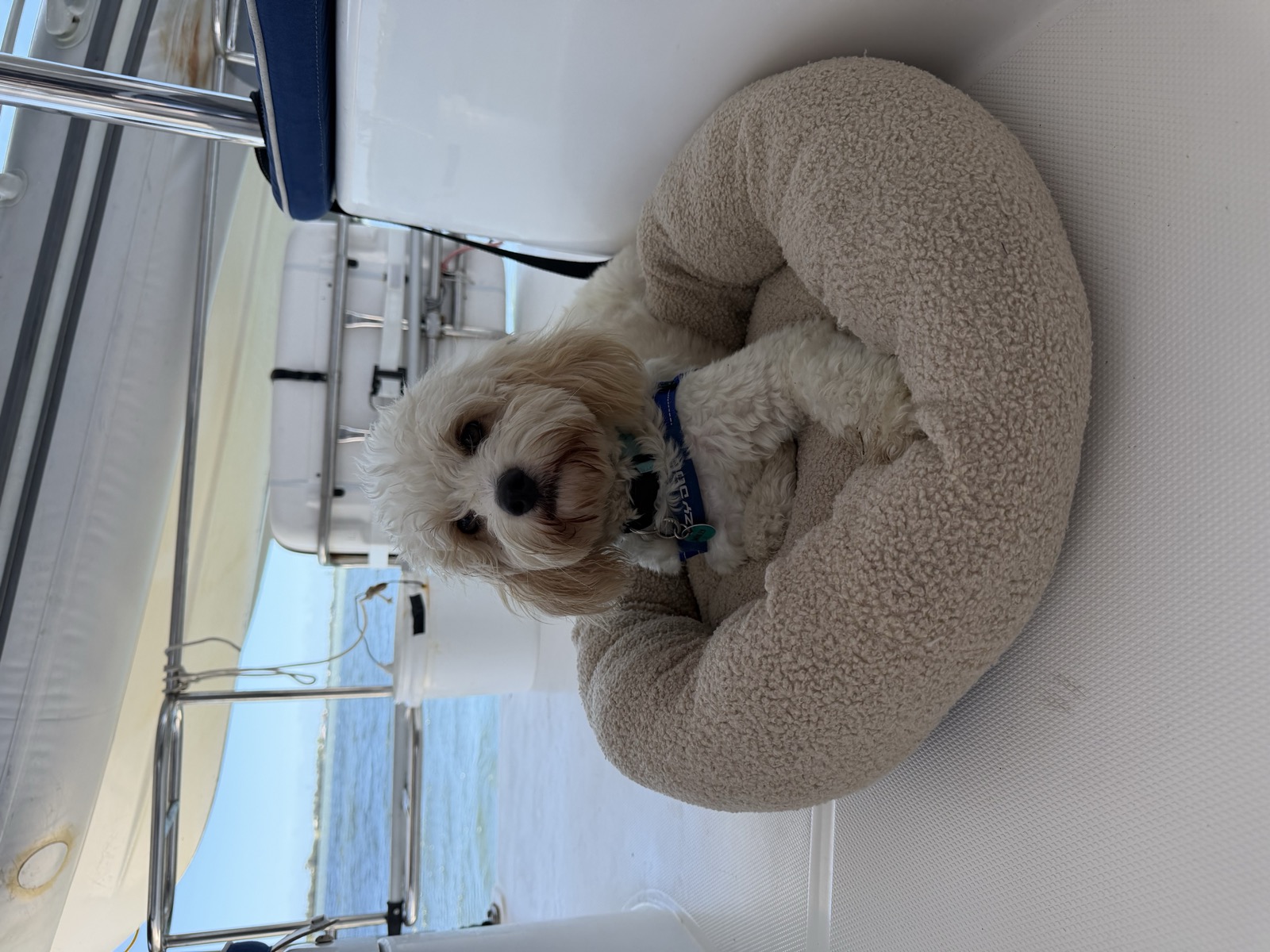
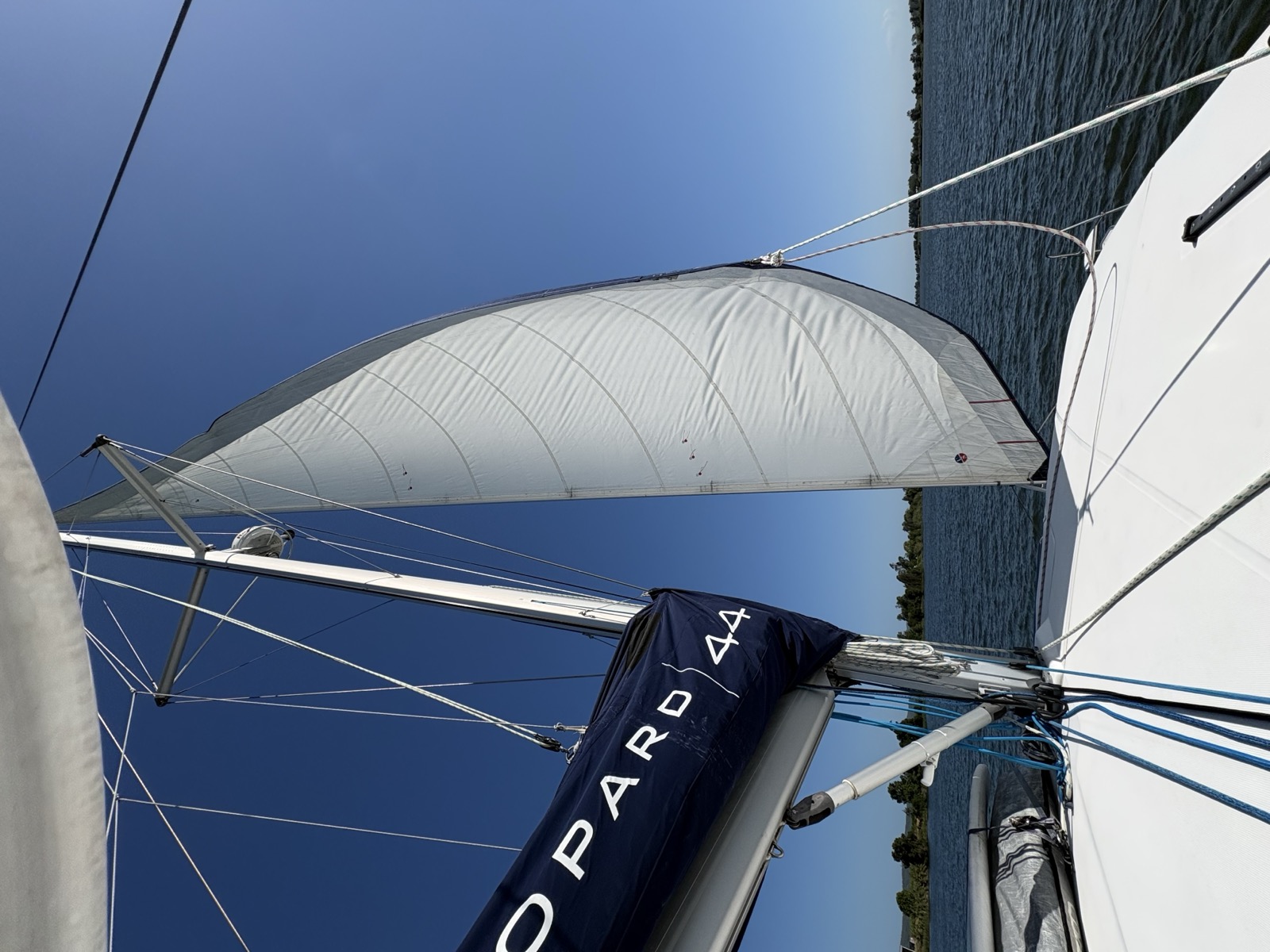
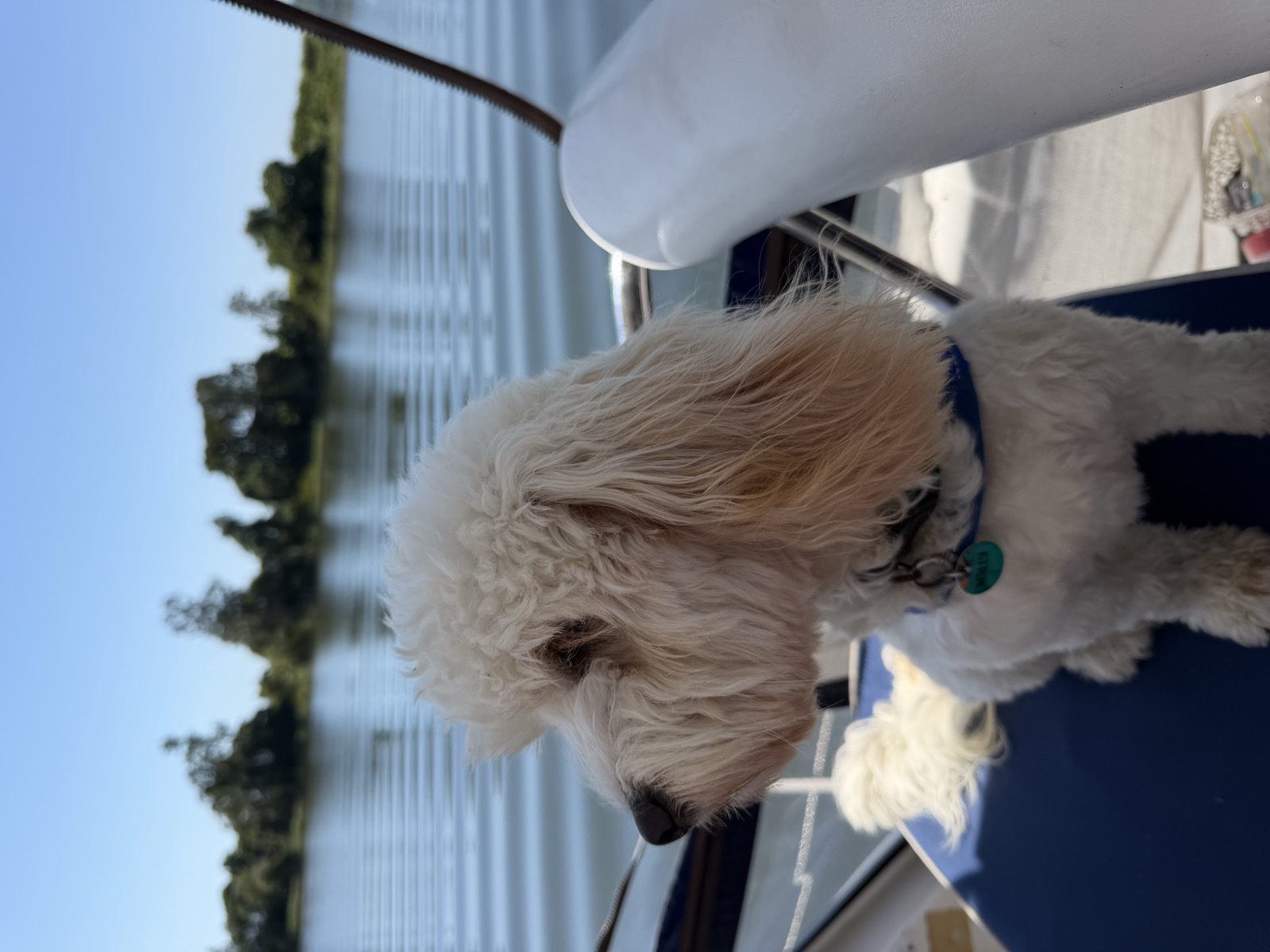
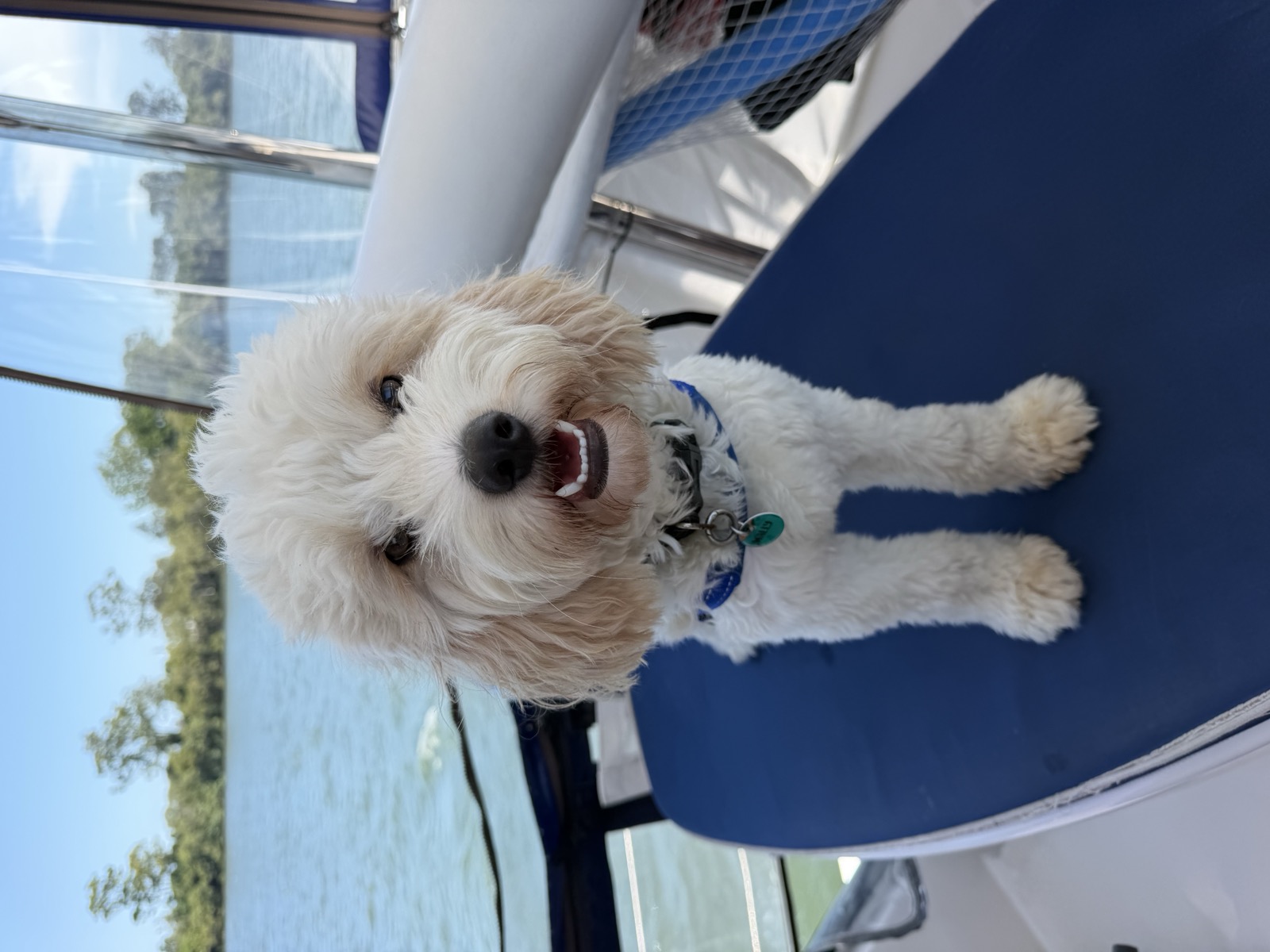
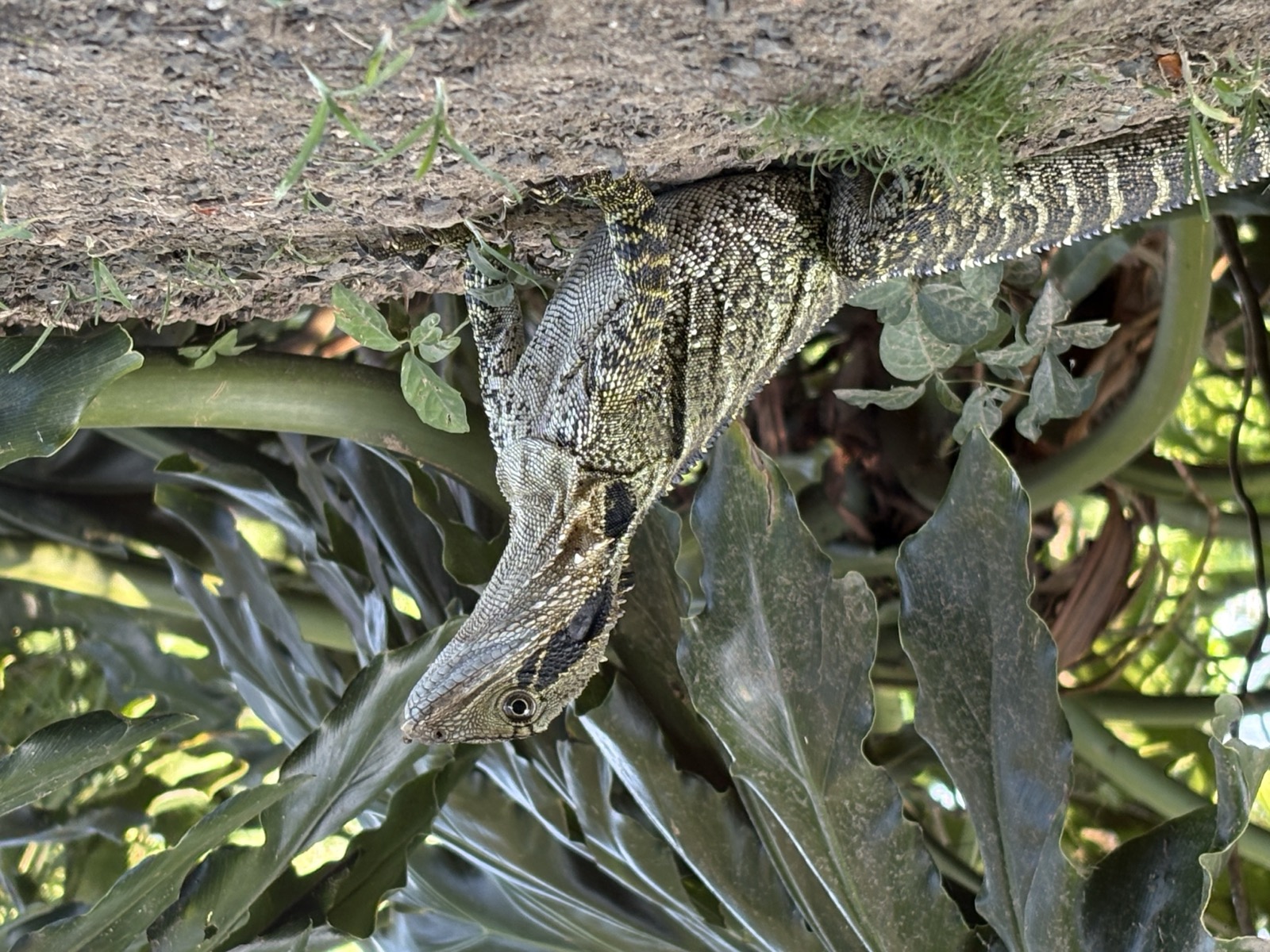
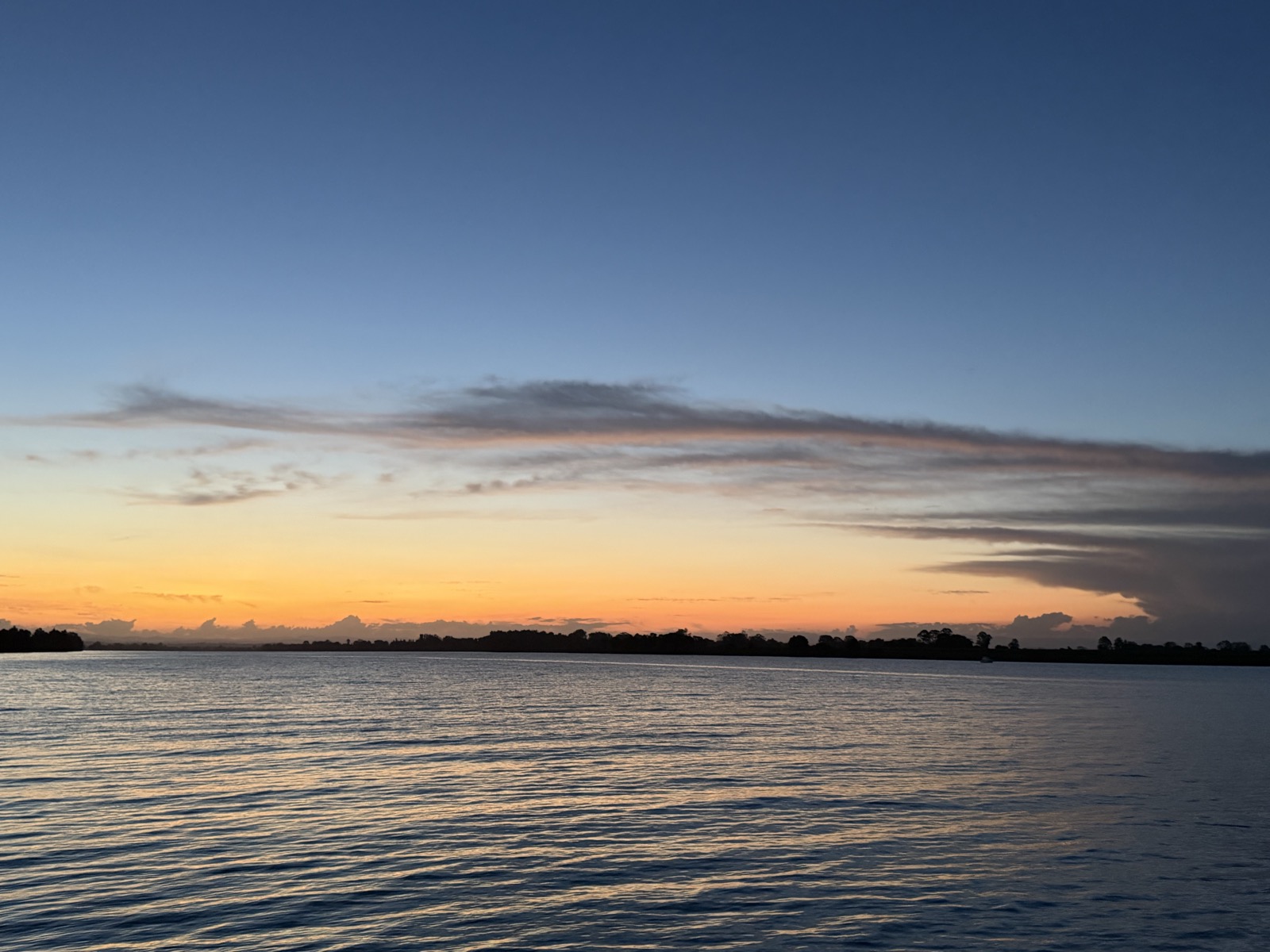
The Keppels 2026
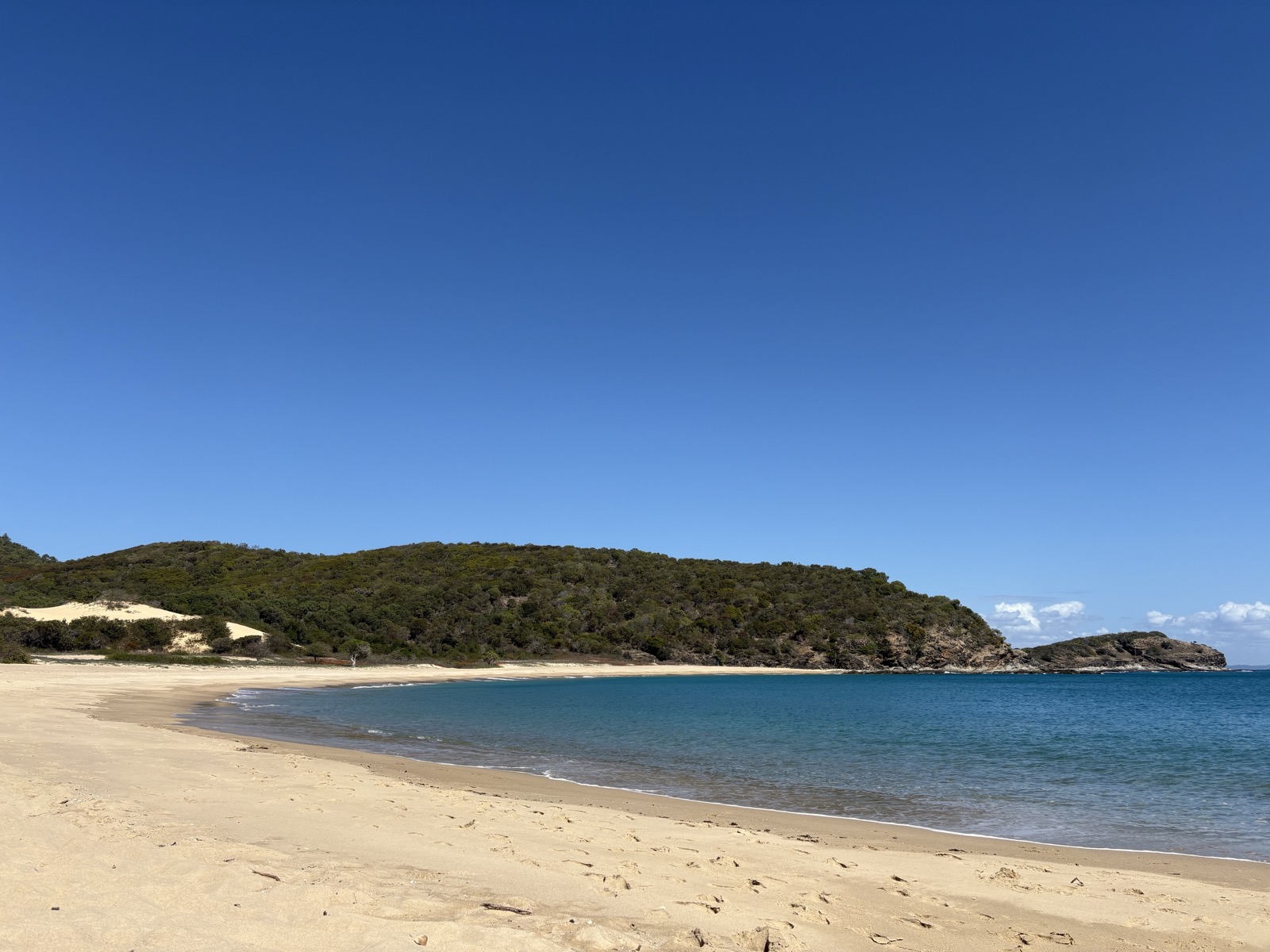
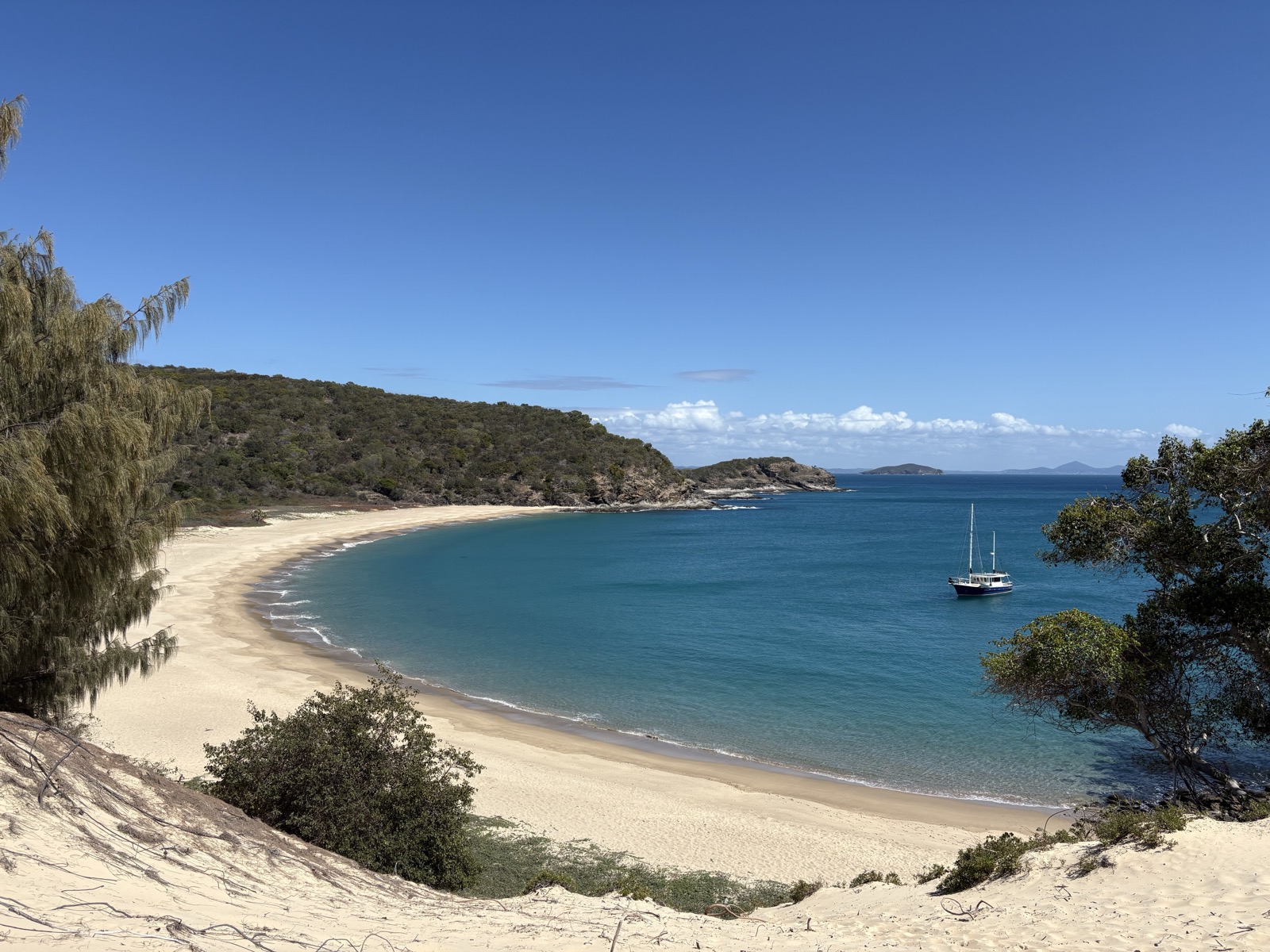
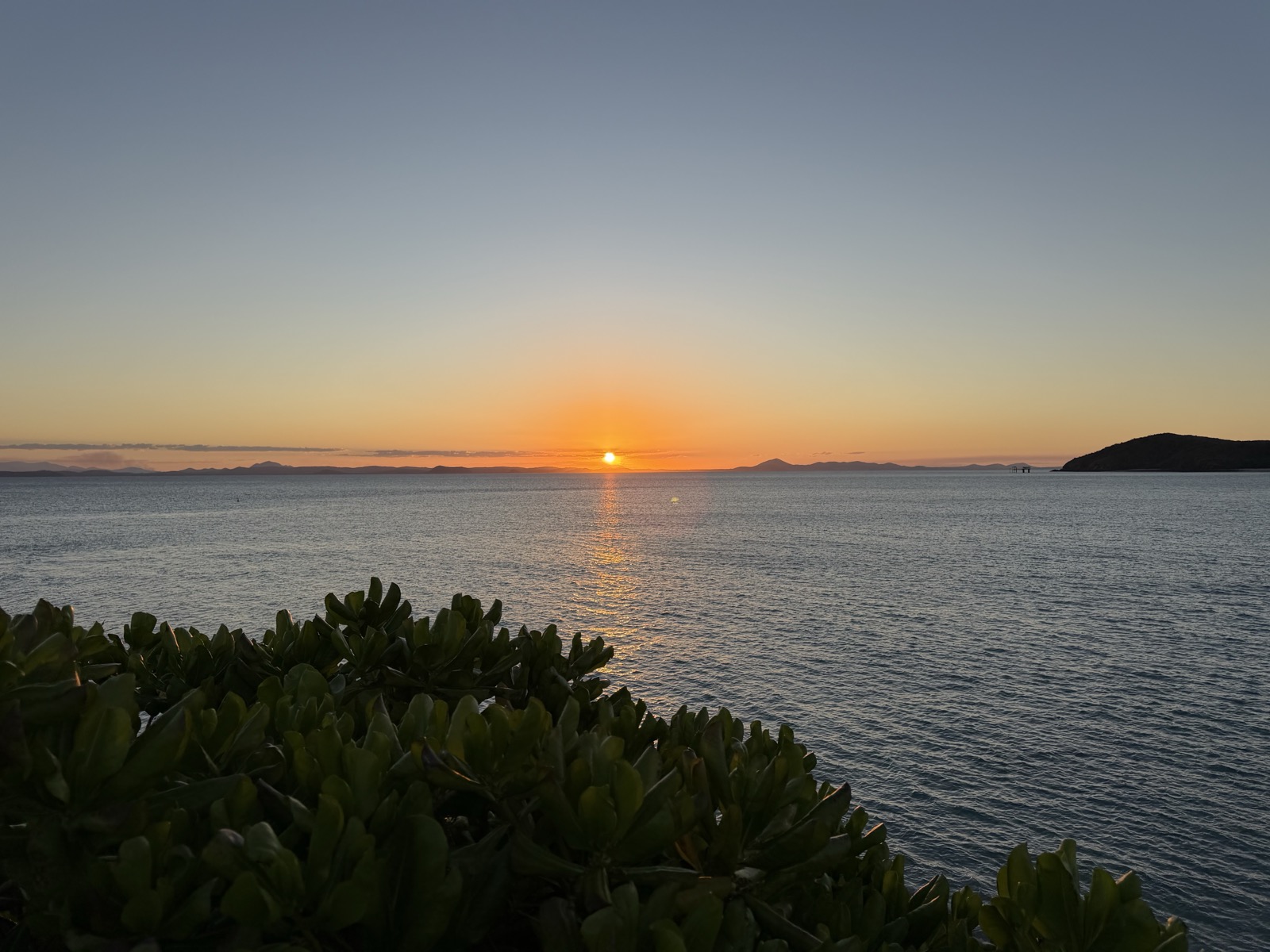
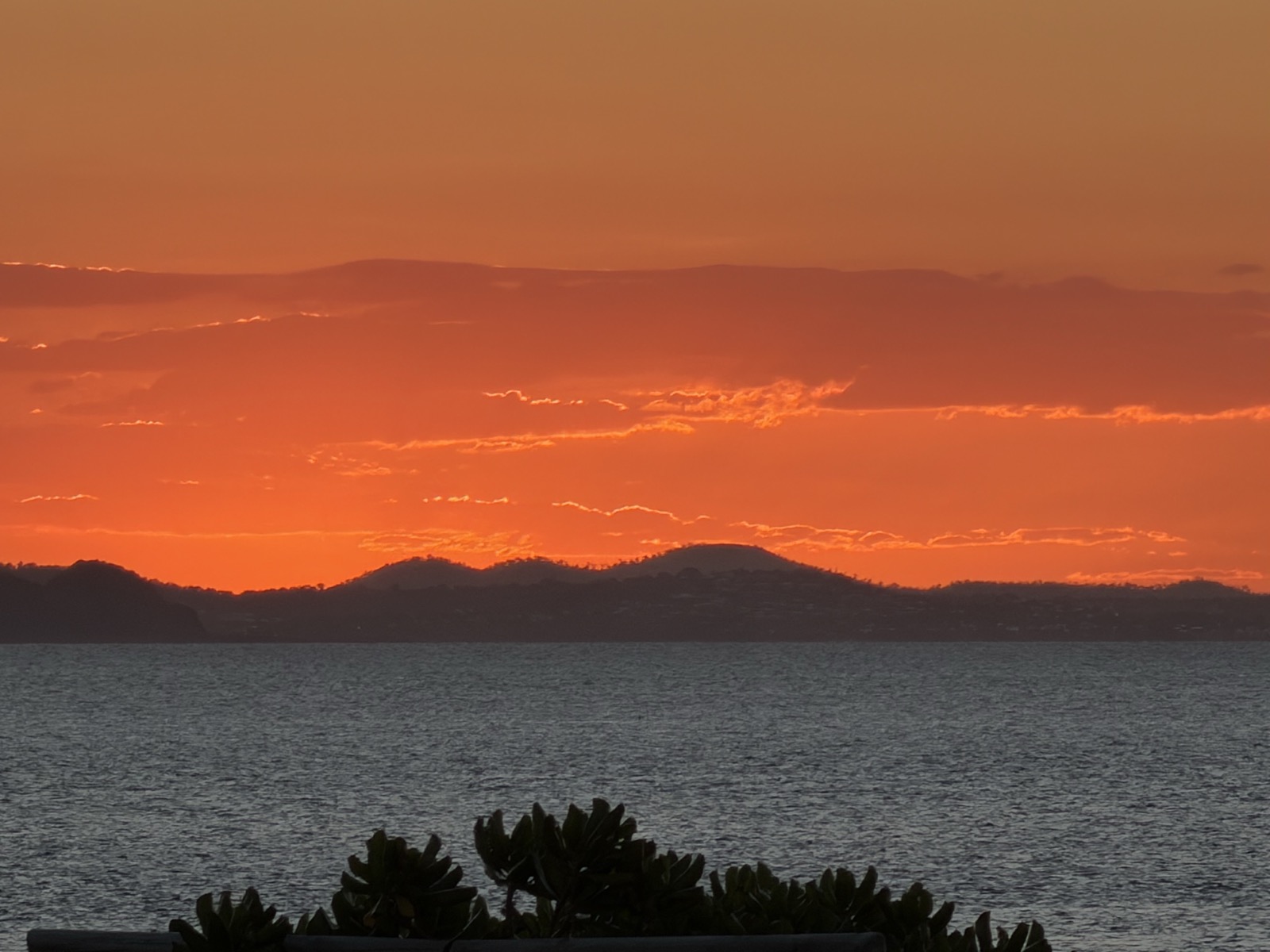
A week out of Keppel Bay Marina. The hop across to Great Keppel had too much swell wrapping around into Fisherman's Beach, so we joined what felt like every other boat in Queensland on the north side — I have never seen it that busy.
The sail from North Keppel back across to Great Keppel was great, and the first real test of the new propellers. 8.4 knots of apparent wind at 60 degrees, and we sat comfortably on 5.8 knots average. In a floating apartment.
Jobs, breakages and upgrades
The starboard engine, and what it wasn't
The starboard engine cut out repeatedly the whole way across from Nouméa, and at the time I assumed something serious. It wasn't. The previous owner had fitted a rubber flap over the exhaust outlet. We had steady seas on the aft quarter at the end of the quarter, and they held that flap shut — so the engine backed up and auto-shut-off, over and over, for five days.
Worth writing down because it cost me a lot of worry at sea for what turned out to be a piece of rubber.
Why the starboard sail drive wore out, and why the props fixed it
The sail drive replacement was a separate problem from the engine, and it has a tidy cause. It was the starboard unit that went.
On this model of saildrive, letting the propeller spin in neutral is bad for it — freewheeling wears the saildrive out. The previous owner had fitted large fixed propellers (the only ones available on short notice). Fixed props under sail generate a lot of drag, so he would leave them turning in neutral. Unfortunately, in time it killed one.
Autostream feathering propellers
The replacements are Autostream S2 feathering props — the sail drive version — made in Australia by JBC Yacht Engineering. They were sold as SeaHawk S2 feathering props until fairly recently, so that is the name you will find them under in older forum threads.
They are usually pitched on boat speed, and they do deliver that. The sail from North Keppel above is a clear example: 5.8 knots average in 8.4 knots of apparent wind - and maxing out at 8.3kts SOG in 11.3kts of apparent wind!
But the more useful outcome is the one that isn't on the marketing page as a headline. Autostream's own specification notes that no shaft brake is needed — the blades stay feathered well past 25 knots. Which means there is no longer any reason to let the props spin in neutral, because there is no drag penalty to avoid. The shaft stays locked, and the sail drive stops being consumed by the workaround.
So the propellers weren't really an upgrade. They were the fix for the thing that broke the sail drive in the first place, and the extra speed is a bonus on top of not having to do that job again.
